Veneers Before and After: What the Photos Show
If you are looking at veneer photos and wondering whether your own teeth could look like that, the answer depends on things the photos leave out. The two comparisons below show what a veneer changes. Everything after them is what we would need to see in your mouth before saying yes.
Two dental veneers before and after comparisons
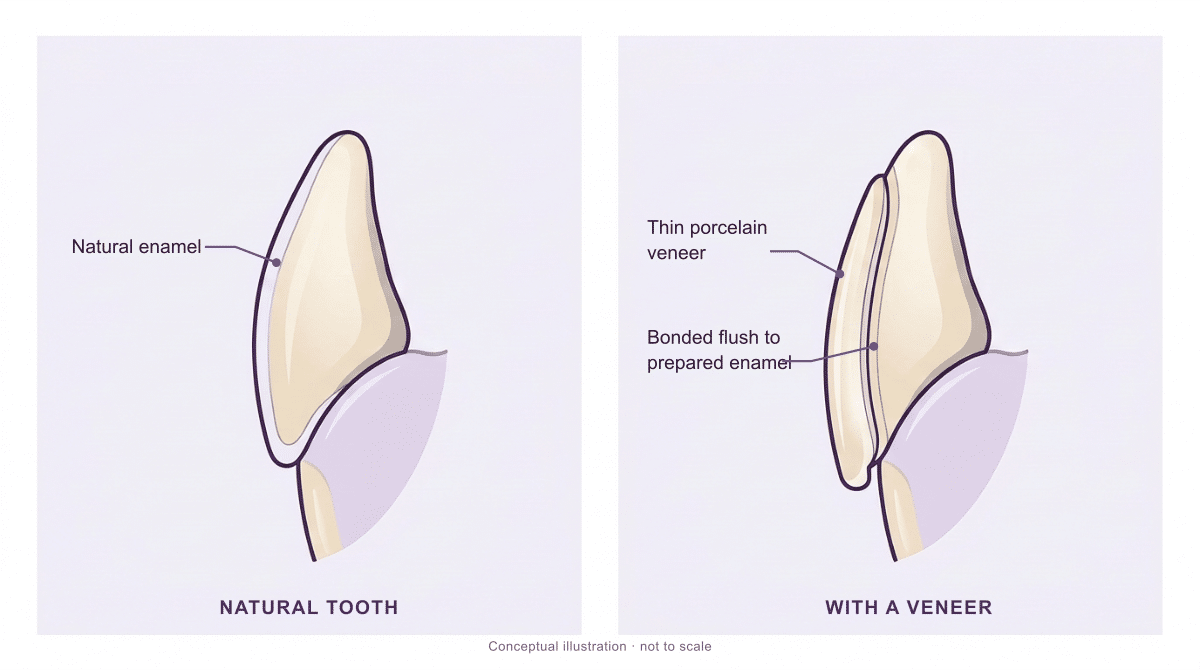
A veneer is a thin shell of porcelain or composite that a dentist bonds to the front of a tooth. It covers the surface you see when you smile, and that is enough to explain both of these pictures.
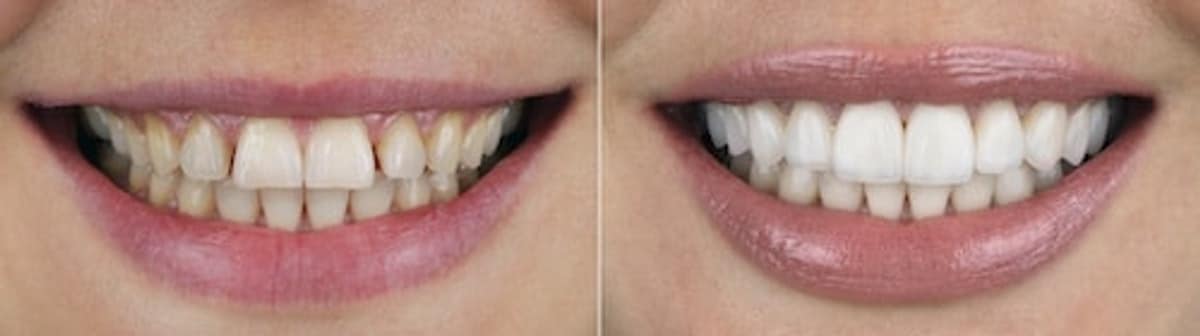 Before
After
Before
After
Here the shell is a lighter shade than the yellow tooth under it, it runs a little past the worn edge so the edges end up level, and it is made a fraction wider than the tooth it covers, which is how the small gap between the front teeth closes.
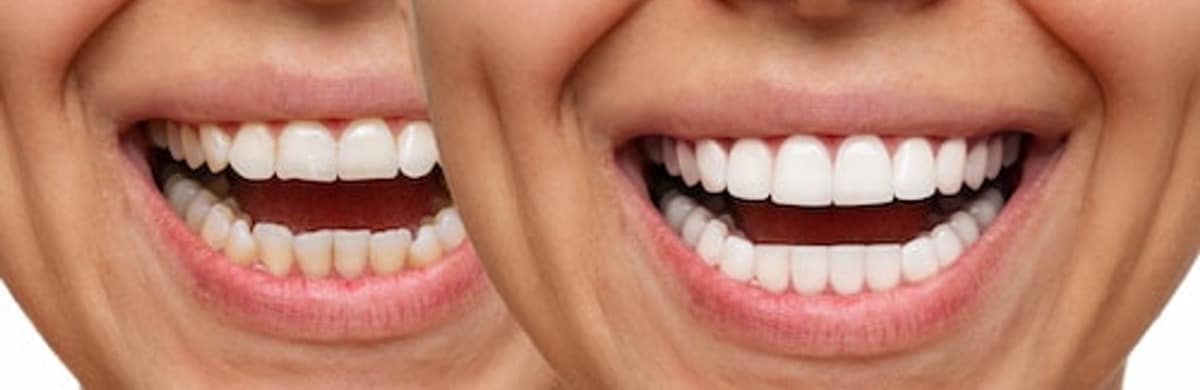 Before
After
Before
After
These teeth were straight already, so the veneers changed the shade and evened up the widths. The position of the teeth is the same in both halves, because a veneer does not move a tooth. A veneer can hide a slight rotation by giving the tooth a new front, but crowded teeth, or a tooth that sits behind the others, usually need braces or aligners before veneers are worth discussing.
Not every veneer photo online shows veneers on their own. In some, a few of the teeth have crowns, and in others the whole set was whitened before the veneers went on, so you cannot always tell how much of the change came from the veneers.
What we check before recommending veneers
When you come in, we check for decay and gum disease first, because a veneer over an unhealthy tooth can make the problem worse, and if we find something it gets treated before veneers come up again.
Then we look at how your teeth meet. A veneer takes the load every time you bite, so if you clench or grind, or you have a deep overbite, the ADA says veneers may not be a good choice. Depending on what we see, we might suggest a night guard first, or a different treatment.
After that we talk about enamel. To seat a porcelain veneer we take a thin layer off the front and sides of the tooth so the shell sits flush, and the enamel does not grow back, which is why the American Dental Association describes the treatment as not reversible. No-prep and minimal-prep veneers remove less but still remove some, and composite veneers may need less again. We tell you how much each tooth would lose before anything is prepared.
Veneers, or something else for your teeth
A veneer covers a surface problem on a healthy tooth. A stain that whitening did not shift, a chip, a tooth that is small or worn short, a gap, or one tooth shaped differently from the rest can all be covered.
A cracked tooth, or one with a lot of it missing, is a different case. A veneer will not make that tooth any stronger, so we would usually suggest a crown, which covers the whole tooth and protects what is left.
Sometimes whitening or bonding would get you the same result with little or no enamel removed. When that is true we will tell you, because enamel removed for a veneer does not come back.
Porcelain and composite veneers
Both materials can produce the kind of change in the comparisons above, and you cannot tell from a photo which one you are looking at.
| Porcelain veneers | Composite veneers | |
|---|---|---|
| Where it is made | In a dental lab, from an impression or scan | On the tooth, in the chair |
| Visits | Two | Usually one |
| Enamel removed | A thin layer from the front and sides | Often less |
| If it chips | Usually replaced | Often repaired in place |
| Stains and wear | Resists both | Stains and wears faster |
| Cost | Higher | Lower |
Porcelain veneers, also called ceramic veneers, are made in a dental lab from an impression or scan of your prepared teeth, and they are the stronger, longer-lasting, more stain-resistant, and more expensive of the two.
Composite veneers are built up on the tooth in the chair from the same tooth-colored resin used in dental bonding, so they take fewer visits, may need less enamel removed, and are easier to repair if they chip. They do stain and wear faster than porcelain.
What a veneer smile transformation involves
Porcelain veneers take two visits. At the first one we numb the teeth, take a thin layer of enamel off the front and sides, and take an impression or a digital scan. That goes to the lab, and the lab takes a few weeks. You may wear temporary veneers while you wait.
At the second visit we place the veneers on your teeth without bonding them, so you can check the shape and shade in a mirror. If you want something changed, tell us then, because the lab can still adjust them. When you are happy with them we bond them on and check your bite. You can eat once the numbness wears off. They will feel strange for a few days, and if your bite still feels wrong after that, come back and we will adjust it.
Composite veneers are usually done in one visit. We build the resin up on the tooth, shape it, harden it with a light, and polish it. No lab is involved.
First visit
We numb the teeth, remove a thin layer of enamel, and take an impression or scan.
The lab
A few weeks. You may wear temporary veneers while you wait.
Second visit
Try-in without bonding, any adjustments, then bonding and a bite check.
What goes wrong with veneers, and how long they last
The enamel does not come back, and some people find the tooth more sensitive to hot and cold after it has been prepared. Later on, a veneer can chip, crack, wear down, or come loose. We can often repair a chip in place and re-bond a loose veneer, but a broken one has to be replaced.
Most veneers that fail either break or come loose, and most of those failures happen in the first few years. A 2021 review of 25 clinical studies and 6,500 porcelain veneers found the same pattern.
Veneers are not permanent. Porcelain outlasts composite, heavy clenching or grinding shortens the life of either, and the tooth underneath can still get a cavity.
Looking after veneers is mostly looking after teeth.
Caring for veneers
- Brush twice a day with a soft brush and a non-abrasive fluoride toothpaste, and floss daily.
- Skip whitening toothpastes and strips. They can scratch a veneer.
- Cut hard foods like apples and carrots instead of biting into them.
- Do not open packaging with your teeth or bite your nails.
- Go easy on coffee, tea, and red wine.
- Wear a mouthguard for contact sports, and a night guard if you grind.
- Keep your checkups so we can look at the veneers and the gum line around them.
Veneers are considered cosmetic. Most dental plans do not pay toward them, and whether yours does depends on the plan and on whether the treatment counts as functional or cosmetic.
Find out whether veneers would work on your teeth
If you want to know whether the change in those pictures is realistic for your own teeth, an examination will tell you. You can request an appointment online with Comprehensive Dental Care in Henderson.
Questions about veneer transformations
Can you tell if someone has veneers?
Not always. What gives veneers away is usually a shade brighter than any natural tooth, or front teeth all cut to exactly the same length, and both of those are decided at the planning stage. Veneers matched to the teeth beside them and to your face are hard to spot.
Why would a dentist advise against veneers?
Untreated decay or gum disease, heavy clenching or grinding, a deep overbite, a tooth that needs a crown, or a concern that whitening or bonding could fix with little or no enamel removed.
What is the 4-8-10 rule for veneers?
A rule of thumb that appears on dental websites. Four veneers cover the front four teeth, eight covers what most people show when they smile, and ten is for a wide smile, and no clinical guideline says any of it. How many you would need depends on how many teeth show when you smile and on what you want changed. For some people it is one tooth.
How soon can I eat after getting veneers?
Once the numbness wears off. There is usually no downtime, although the veneers feel unfamiliar for a few days.
What happens if I request an evaluation?
The examination described above, plus a conversation about what you want changed. We tell you whether veneers fit and, if they do not, what would. Requesting an appointment does not commit you to any treatment. If you want to know what affects the price before you come in, that is in the veneer cost guide.