Do Dental Implants Hurt? What You Feel During and After Surgery
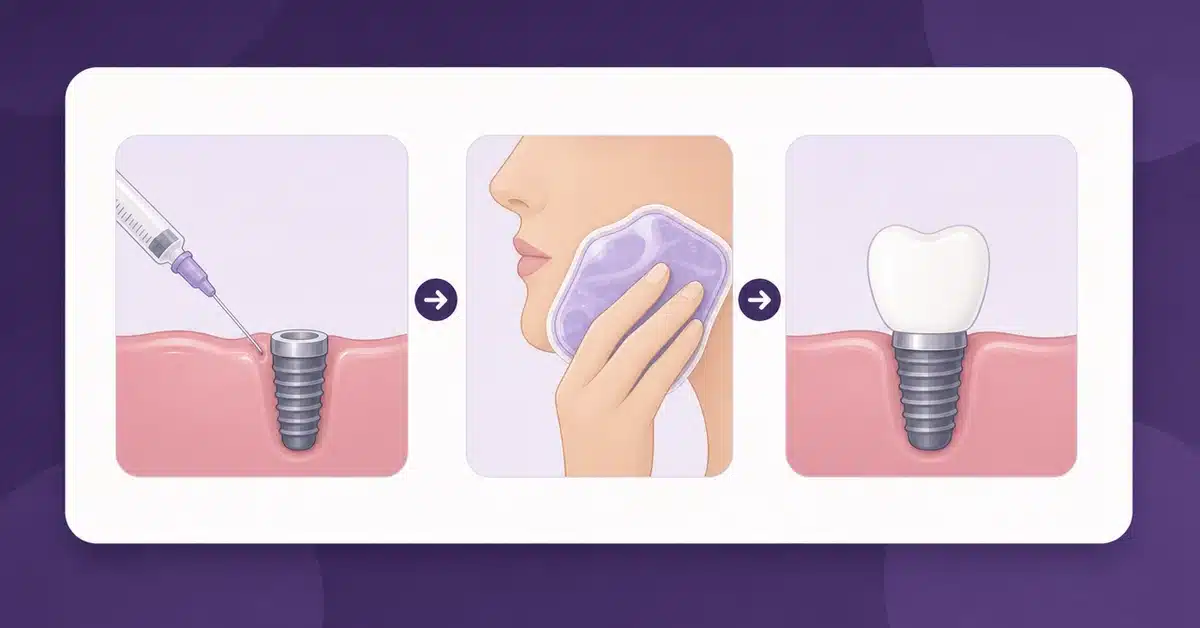
Do dental implants hurt? Not during the procedure itself. We numb the area before we start, so what you’ll notice is pressure, a bit of vibration and the sound of the instruments. The soreness comes later, once the anesthetic wears off, and for most people it’s at its worst over the first two or three days and has mostly settled within a week.
How sore you’ll be depends a lot on what’s being done that day. Placing one implant where a tooth was removed months ago is a fairly small procedure. Removing a tooth, adding a bone graft and placing several implants in one visit is a bigger one, so you should expect a longer recovery. If you’re considering dental implants in Henderson, we can tell you which kind of day yours would be.
You’ll be numb for the surgery itself
The ache starts a few hours later, when the anesthetic wears off. Days one and two are the hardest, and by the end of the first week it’s mostly gone.
During placementYou’re numb, so you’ll feel pressure but no sharp pain.
The sorest daysExpect a dull ache, and swelling that’s often biggest on day two.
Mostly tenderBy now it’s tenderness more than pain. Call us if it gets worse again.
Do dental implants hurt during placement?
The numbing shot is a quick pinch in the gum, and for most people it’s the only part they’d call a sting. Once it has kicked in, we test the area before doing anything else. You’ll still feel us working, because the anesthetic takes away pain but not pressure, so there’s some pushing and a buzzing in the jaw. If anything feels sharp, put your hand up and we’ll stop and top up the anesthetic.
The sound of the drill bothers some patients more than anything they feel in the chair. If that worries you, say so at the start and we’ll tell you what’s coming before each step.
- Pressure on the jaw
- Vibration from the instruments
- Your mouth held open for a while
- The drill
- Suction and water spray
- Us explaining each step
- Sharp or stabbing pain
- If you do, raise your hand and we’ll stop
Has a dentist ever had trouble getting you numb? Let us know before surgery day, since that’s something we can plan around. We’ll also go over allergies, sleep apnea, any past reaction to sedation and the medicines you’re on. Our implant procedure walkthrough goes through the surgery itself step by step.
Dental implant recovery time, day by day
Most people’s soreness follows the same rough pattern. It creeps in a few hours after you get home, as the anesthetic wears off, and is at its worst on day one or two. Swelling runs about a day behind, which is why you can leave the office looking fine and wake up the next morning with a puffy cheek. Some people bruise too. By the end of the first week, most of it has settled down.
| When | Typical soreness | What you might feel | What helps |
|---|---|---|---|
| Surgery day | Numb, then building | Numb for a few hours, then tender. A little oozing is normal. | Rest, and keep gentle pressure on any gauze. If we recommend ice, use it for 10 minutes each hour for the first 6 hours, wrapped in a cloth. Don’t chew while you’re numb. |
| Days 1 to 3 | Peak | A dull ache in the gum or jaw. Swelling, and sometimes bruising. | Take painkillers regularly for the first 48 hours. Eat soft food that isn’t hot. No alcohol for the first 24 hours. |
| Days 4 to 7 | Easing | Talking and chewing get easier. The area is still tender to touch. | Don’t brush the implant itself for the first week. We’ll show you how to keep it clean. |
| Week 2 | Mild | The gum keeps healing. Stitches usually come out between day 7 and day 14. | Come to your follow-up visit. Check with us before chewing hard food on that side. |
| The next few months | Usually none | The implant bonds with the bone. You usually won’t feel it. | Follow the food and cleaning instructions until the final tooth is fitted. |
This is the usual course for one straightforward implant. An extraction, a bone graft or several implants can make each stage longer.
The first evening at home
Make sure you know which painkiller to take, and when, before you head home. It’s best to take the first dose before the numbness fades, because once the ache has set in it’s harder to get on top of. Hot food and drinks are off the menu for two days. Your lip and cheek can stay numb for a few hours, and it’s easy to bite or burn them without realizing. A little pink in your saliva that evening is nothing to worry about. If we’ve sent you home with gauze, keep steady pressure on it instead of lifting it to check, and if you’ve had sedation, someone else has to do the driving.
Days two through seven
It’s very common for swelling to be at its largest on the second day, and it usually goes down gradually over five to seven days. As the week goes on, you’ll likely reach for the painkillers less. At your follow-up we’ll tell you when you can brush the area normally, get back to the gym, wear a removable denture or chew on a temporary tooth.
The gum can look healed within a couple of weeks, while the implant takes months to bond with the bone underneath. You shouldn’t be able to feel that part.
Want a recovery plan for your own case?
At a comfort consultation we’ll go through your procedure, the pain relief that suits you and how much time off to plan for. You don’t have to agree to surgery to book one.
How painful is a dental implant compared with other dental work?
For most people, implant pain is mild. On a 0 to 10 scale, patients put it at about 2 on average, and that’s at its worst, roughly 24 hours after surgery. Patients who kept up with their painkillers scored lower, and so did those whose surgery took less than an hour.
About half the patients reported no pain at all, even at the worst point
2.2 out of 10The average score at 24 hours, the most painful point the study measured.
137 patients. Mai et al., 2021
The same 40 patients rated the implant lower at every check
- Lower molar extraction
- Implant in the same spot, 2 months later
One small study, no bone grafts. Tabrizi et al., 2020
Having an implant placed also tends to hurt less than having a tooth pulled. In one study, 40 patients had a lower molar removed, and two months later each of them had an implant placed in the same spot. When they were asked over the following three days, they rated the implant as less painful every time. If your tooth is removed and the implant is placed during the same visit, though, you’ll be recovering from both at once.
What makes implant pain worse or better
A tooth removed first
The socket and the implant site heal at the same time, so there’s more to recover from.
Bone grafting
A graft is another area that has to heal, and it can mean more swelling. Some throbbing in the first few days is common.
How many implants
More implants means more tissue to heal. Full-arch cases come with more instructions about food and cleaning.
Length of surgery
In the 137-patient study, people whose surgery ran past an hour had more pain the next day.
Smoking
Smoking slows healing in the gum and bone and makes complications more likely, so it’s worth stopping before treatment and staying off cigarettes afterward.
Taking painkillers as directed
Patients who took their painkillers as directed had lower pain scores. Pain is harder to control once it has built up.
Managing dental implant pain at home
We’ll sort out your painkiller plan with you before surgery day. For this sort of short-term dental pain, ibuprofen or a similar anti-inflammatory is the usual starting point, sometimes paired with acetaminophen, and opioids are rarely needed. Ibuprofen isn’t right for everyone, though. If you’re on a blood thinner or have kidney, liver or stomach problems, it may not be safe, so the dose should come from us. And if the plan isn’t keeping the pain under control, call us before you take more.
Get ready before surgery day
Check items off as you go.
Normal soreness or time to call?
After the first few days, things should get a little better each day. If the pain turns around and starts getting worse, give us a call, even if everything looks fine. You can tap a symptom below to see whether it’s part of normal healing.
Tap what you’re noticing
This is usually the sorest stretch. Keep taking your painkillers on schedule and stick to soft food. It should ease from about day four.
Swelling usually peaks on day two or three and goes down over five to seven days.
A bruise on the cheek or jaw can show up a day or two after surgery and fades as the swelling goes down. If it spreads fast, or the swelling keeps growing, call us.
Pink-tinged saliva is common on the first day. For bleeding that won’t stop, fold some gauze or a clean handkerchief into a pad and press on it for at least 30 minutes. If it’s still bleeding after that, call us.
Pain should be easing by now. If it’s getting worse, we need to see you.
When pain fades and then returns, we want to take a look, even if the area looks normal to you.
Swelling that grows late in the first week, instead of going down, should be checked.
These can be signs of infection. Call us today rather than waiting for your next appointment.
The anesthetic should wear off within a few hours. A lip, chin or tongue that’s still numb or tingling the next morning needs a call to us.
This is an emergency. Call 911 or go to the nearest emergency room, and contact us once you’re safe.
If you’re not sure which one fits, call (702) 735-3284 and tell us what you’re noticing.
Pain on its own won’t tell you whether something’s wrong. Infection and nerve damage are both known complications of implant surgery, and it takes an exam to tell them apart.
Local anesthesia and sedation
Sedation doesn’t replace the numbing injection. You’ll get local anesthetic either way, and sedation can make you calmer and drowsier during the appointment. It does nothing for the soreness the next day. We can tell you whether IV sedation at our practice fits your procedure and health history, and if you have it, you’ll need someone to drive you home.
Whether or not you choose sedation, we’ll agree on a stop signal before we begin. You can read more about the options in our dental sedation comparison, and if dental visits make you anxious in general, our article on overcoming dental anxiety may help.
Older adults and full-arch implants
Implants aren’t off the table just because you’re older. What we look at is whether your gums and jawbone are in good enough shape, and whether any medicines or health conditions, diabetes for example, might slow healing. If you live on your own, line up a ride home and someone to help with meals that first evening.
A Hybridge full-arch restoration involves placing several implants in one visit, so you should expect more swelling than you would with a single implant, along with more rules about what you can eat while any temporary teeth are in. If a temporary tooth rubs, let us know. Dr. Gregg C. Hendrickson, who places implants at Comprehensive Dental Care, is an ABOI/ID Diplomate, an AAID Fellow, an ICOI Fellow and a National Trainer for Hybridge Full Arch Restorations. You’ll find information about payment options on our patient financing page.
Can a dental implant hurt years later?
A healed implant shouldn’t hurt. When one starts hurting months or years down the line, it’s usually one of the four problems below, and all of them are easier to treat if we catch them early.
Inflamed gum or bone around the implant
Gum that bleeds when you brush around the implant, looks puffy or seems to be pulling back, or a bad taste in that spot, can all point to inflamed tissue. If the inflammation works its way down to the bone, it becomes peri-implantitis, which slowly eats away at the bone holding the implant. Research reviews find it in about 1 in 5 implant patients.
Next step: book a visit so we can check it.
A loose crown or screw
A crown that clicks, shifts or suddenly bites differently may have a loose screw underneath.
Next step: call us and chew on the other side until we’ve had a look.
Bite pressure or grinding
If you wake up with an ache, or notice one after meals, you may be clenching or grinding at night.
Next step: mention it at your next visit. A small bite adjustment or a night guard often sorts it out.
Food trapped next to it
Gum that’s sore between the implant and the next tooth, mostly after you eat, often means food is getting packed into the gap.
Next step: clean the gap gently and ask us which floss or brush fits it best.
Regular cleanings and checkups pick up most of these problems early. For more on caring for an implant over the long term, see our guide to how long dental implants last.
Questions patients ask about implant pain
Is getting an implant more painful than having a tooth pulled?
Usually not. In a small study, patients who had a molar removed and then had an implant placed in the same spot two months later rated the implant as less painful. If your tooth is removed and the implant placed during the same visit, you’ll be healing from both at once.
Are you awake for dental implant surgery?
Most people are awake for implant surgery, with the area numbed by local anesthetic. If you’re anxious or the procedure is going to take longer, sedation may be an option.
How long does implant surgery take?
That depends on how many implants you’re having and whether a tooth is being removed or a graft placed at the same visit. We’ll give you a time estimate for your own treatment plan well before the day.
Can I go back to work the next day?
Many people are able to go back to work the day after a simple placement. Give yourself more time off if you’re having a graft, a full arch or sedation, or if your job involves heavy lifting.
Is throbbing after a bone graft normal?
Some throbbing in the first few days is normal, because the graft site has to heal as well. Call us if it’s getting worse after the third day, or if you notice a fever or pus.
How long until the final tooth goes on?
Expect a few months. The implant has to fuse with the bone before it can carry a crown, which typically takes around three months in the lower jaw and up to six in the upper. A bone graft adds several months on top of that.
Should my implant hurt when I chew?
No, a healed implant shouldn’t hurt when you chew. If it does, the cause could be a loose crown or screw, too much pressure from your bite or inflamed gum, so it’s worth coming in to have it checked.
What surprises people most about implant recovery?
For a lot of people, it’s that the swelling is bigger on the second day than on the day of surgery. That’s completely normal and doesn’t mean anything has gone wrong.
Talk through the first week before you decide
Tell us which part worries you most, whether it’s the injection, the noise or the first night at home. Dr. Gregg C. Hendrickson will go through your procedure with you and work out which pain relief is safe for you. You’ll leave with a plan, and you can decide about surgery in your own time.