Top Sedation Dentistry in Las Vegas: Nitrous vs. Oral vs. IV and Who Each One Best Fits
Most patients weighing sedation dentistry land in one of three groups. Nitrous oxide fits mild anxiety and shorter, routine visits. Oral conscious sedation fits moderate anxiety or appointments long enough to dread. IV sedation fits severe anxiety, a strong gag reflex, or extensive treatment such as implant surgery or several procedures combined into one visit.
None of these options means being put to sleep. That surprises many people who search for “sleep dentistry,” a marketing phrase that almost always describes conscious sedation rather than general anesthesia. At the sedation levels used in most dental offices, you keep breathing on your own and can respond when someone speaks to you.
The comparison below covers what each option feels like, how each one is controlled, what recovery involves, and who tends to do well with each. Your health history and the treatment planned decide the final answer, so treat this as preparation for a conversation with your dentist rather than a substitute for one.
What sedation dentistry actually does
Dental sedation works on a spectrum. At the lighter end, called minimal sedation, you are relaxed but respond normally when spoken to. At moderate sedation, you respond purposefully to a voice or a light touch, and you may doze between prompts. The American Dental Association defines these levels by how the patient responds during treatment, since the same medication can produce different depths in different people.
One more distinction saves confusion later. Sedation manages fear and awareness. It does not replace the local anesthetic that numbs the treatment area, and you receive that numbing with any of the three options. The sedation decision is really about how much of the appointment you want to experience and how your body handles being in the chair, while pain control is handled separately either way.
That spectrum is the honest frame for comparing nitrous, oral, and IV sedation. They are not three brands of the same experience. They differ in how deep they go, how quickly your dentist can adjust them, and how long they stay in your system after the appointment ends.
Nitrous oxide (laughing gas)
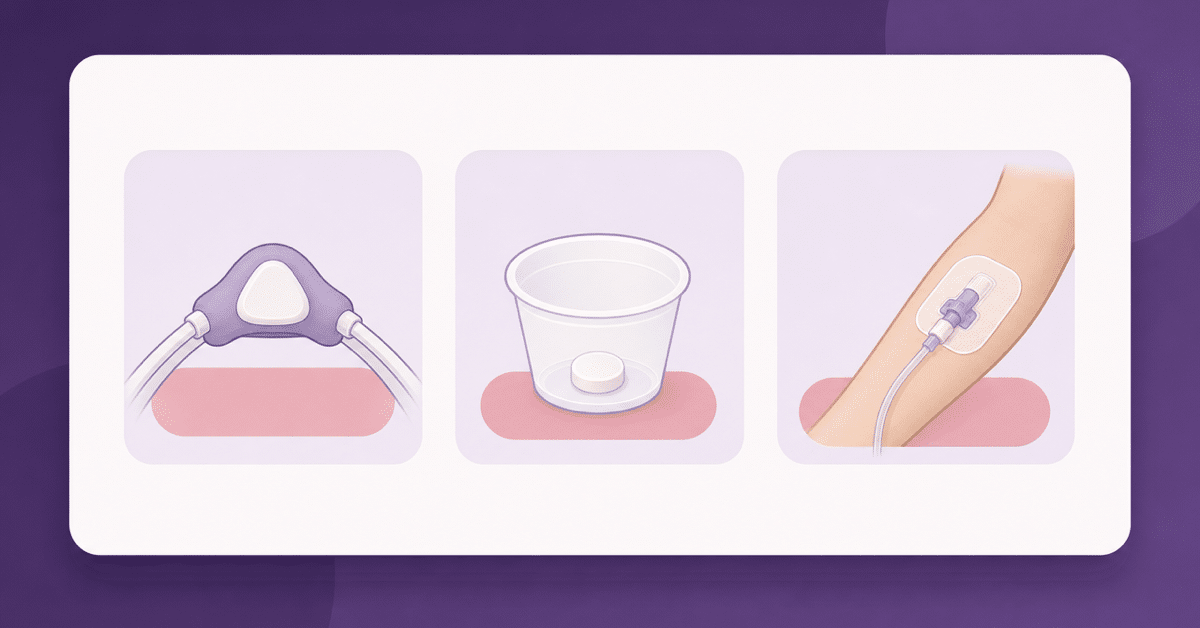
Nitrous oxide is inhaled through a small mask over the nose, mixed with oxygen. It starts working within minutes, and most patients describe a light, slightly floating calm while it does. Your dentist can raise or lower the concentration during treatment, so the level of relaxation is adjustable in real time. You stay awake and can answer questions the whole time.
Recovery is where nitrous stands apart. The gas leaves the body quickly through the lungs, and standard practice is to breathe pure oxygen for about five minutes after the mask comes off to help clear it. Many patients return to a normal day afterward. Driving yourself home is not automatic, though. It depends on the level of sedation reached, any other medications involved, and your dentist’s instructions, so confirm the plan before your appointment instead of assuming.
Nitrous tends to fit patients with mild anxiety, people nervous about needles, and anyone having routine general dentistry such as cleanings and fillings who needs to get back to work the same day.
Its limit is depth. If your anxiety is strong enough that you cancel appointments, nitrous alone often is not enough.
Oral conscious sedation
Oral sedation uses a prescribed sedative taken by mouth before your appointment, on a schedule your dentist sets. For most patients it produces deeper relaxation than nitrous. You will feel drowsy, you may drift off between steps of the procedure, and the visit can feel much shorter than it was. Reduced memory of the appointment is common, although no dentist can promise it.
The trade-off is control. Once the pill is swallowed, the dose cannot be dialed up or down the way inhaled or IV medication can. Your dentist plans it in advance from your weight, health history, and current medications, then monitors you at a level that matches the depth reached.
The effects also linger for hours. Plan on someone driving you both ways, and clear the rest of your day.
Oral sedation tends to fit moderate anxiety, appointments that run longer than a routine visit, and patients whose fear builds for days beforehand. If avoidance itself is the bigger obstacle, this guide to overcoming dental anxiety looks at that side of the problem.
IV sedation dentistry
IV sedation delivers medication directly into a vein, which gives it two properties the other options cannot match. It takes effect fast, and your dentist can adjust the dose continuously throughout the procedure, managing the depth minute to minute.
Under IV sedation you are deeply relaxed but generally still responsive to a voice or a light touch. Many patients remember little or nothing of the appointment, though some retain pieces of it. Because the sedation runs deeper, monitoring is more involved. Your responsiveness, oxygen levels, breathing, blood pressure, and heart rate are tracked continuously, and you go home only after your dentist confirms you meet documented recovery criteria.
IV sedation also carries the strictest requirements of the three. Nevada law prohibits a dentist from administering it without a permit from the state dental board. At Comprehensive Dental Care, Dr. Gregg C. Hendrickson is licensed by the Nevada State Board of Dental Examiners to administer IV sedation.
This is the option built for the hardest cases: severe anxiety, a gag reflex strong enough to interfere with treatment, and long or extensive work such as dental implant surgery, multiple extractions, or a treatment plan compressed into one long appointment. A ride home is required, and the rest of the day should be set aside for rest.
Nitrous vs. oral vs. IV at a glance
| Nitrous oxide | Oral sedation | IV sedation | |
|---|---|---|---|
| Typical fit | Mild anxiety, shorter routine visits, needle concerns | Moderate anxiety, longer appointments | Severe anxiety, strong gag reflex, extensive or combined procedures |
| How it is given | Inhaled through a nasal mask | Prescribed sedative taken before the visit | Medication delivered through a vein |
| Awareness | Awake and responsive | Drowsy, may drift off, remains rousable | Deeply relaxed, generally responsive to voice or touch |
| Adjustability | Adjusted in real time during treatment | Cannot be changed once taken | Adjusted continuously during treatment |
| Memory of the visit | Usually intact | Often reduced, not guaranteed | Often little or none, not guaranteed |
| Recovery | Fastest, gas clears through the lungs | Effects linger for hours | Effects linger, discharge after documented criteria are met |
| Ride home | Depends on level reached and dentist’s instructions | Required | Required |
Wondering whether IV sedation fits your case?
How to choose the right sedation level
The pattern in the table comes down to a handful of questions you can think through before a consultation.
How strong is the anxiety? Nervousness you can push through points to nitrous. Fear that makes you reschedule points to oral or IV sedation.
How long is the procedure? The longer you need to stay still, the more a deeper option earns its keep. An hour in the chair for a filling is a different problem from a three-hour implant appointment.
What does your health history look like? Medical conditions, pregnancy, breathing problems, current medications, and past reactions to sedatives all shape which options are appropriate and at what dose. This is the main reason the decision gets finished in an exam room and not on a webpage.
How much do you want to remember? If less memory of the appointment matters to you, oral or IV sedation makes that outcome more likely without guaranteeing it.
Who can drive you? Oral and IV sedation require an escort. If arranging a ride is genuinely impossible, that constraint may point toward nitrous, paired with an honest talk about what else would help.
Safety is usually the question patients hold back. The protections are procedural. Before sedation, your dentist reviews your health history, medications, and vital signs. During treatment, monitoring matches the depth of sedation. Afterward, you are discharged when you meet recovery criteria, not when a clock runs out. Any practice offering sedation should be able to walk you through those three stages without hesitation.
Sedation dentistry FAQs
Will I be asleep during the procedure?
Not in the way the phrase suggests. “Sleep dentistry” usually refers to conscious sedation, where you may doze but remain responsive and breathe on your own. General anesthesia, where you are fully unconscious, is a different category of care arranged for specific cases.
Will I remember the appointment?
With nitrous, usually yes. With oral and IV sedation, reduced or absent memory is common but varies from patient to patient. No sedation option guarantees you will remember nothing.
Can I drive myself home?
After oral or IV sedation, no. Arrange a driver in advance. After nitrous, possibly, since the gas clears quickly, but it depends on the level used and your dentist’s instructions, so settle it before the visit.
How am I monitored during IV sedation?
Continuously. That includes your responsiveness, oxygen levels, breathing, blood pressure, and heart rate. Discharge happens only after documented recovery criteria are met.
What about a strong gag reflex or a long procedure?
Both point toward IV sedation. It manages the reflex more reliably than lighter options and keeps a long appointment tolerable, which is why it is the usual choice for implant surgery and visits that combine several treatments.
Is sedation dentistry safe?
Safety depends on process, and the process is checkable. Your health history and medications are reviewed before any sedative is given, monitoring during treatment matches the depth of sedation, and discharge follows documented recovery criteria. In Nevada, a dentist administering sedation must also hold a permit from the state dental board, which gives you something concrete to verify.
Finding a sedation dentist in Las Vegas
Sedation is regulated at the state level, which makes vetting a Las Vegas practice simpler than most people expect. Nevada requires a permit from the Nevada State Board of Dental Examiners before a dentist may administer sedation, so ask which permits the provider holds, who administers the medication, and who monitors you during treatment. A practice that offers the full range of options can match the sedation to your case instead of steering every patient toward the one method it happens to have.
This comparison can point you toward a likely starting option. The go-ahead has to come from an exam, because your health history and the treatment you actually need decide the rest, and that review takes one conversation.
Comprehensive Dental Care provides sedation ranging from nitrous oxide to IV sedation.
to schedule an evaluation, or read more about IV sedation if extensive treatment is on the table.
If cost is part of your decision, the patient financing page explains the payment options the practice works with.