Can You Pull an Abscessed Tooth? 7 Dangers of DIY Extraction
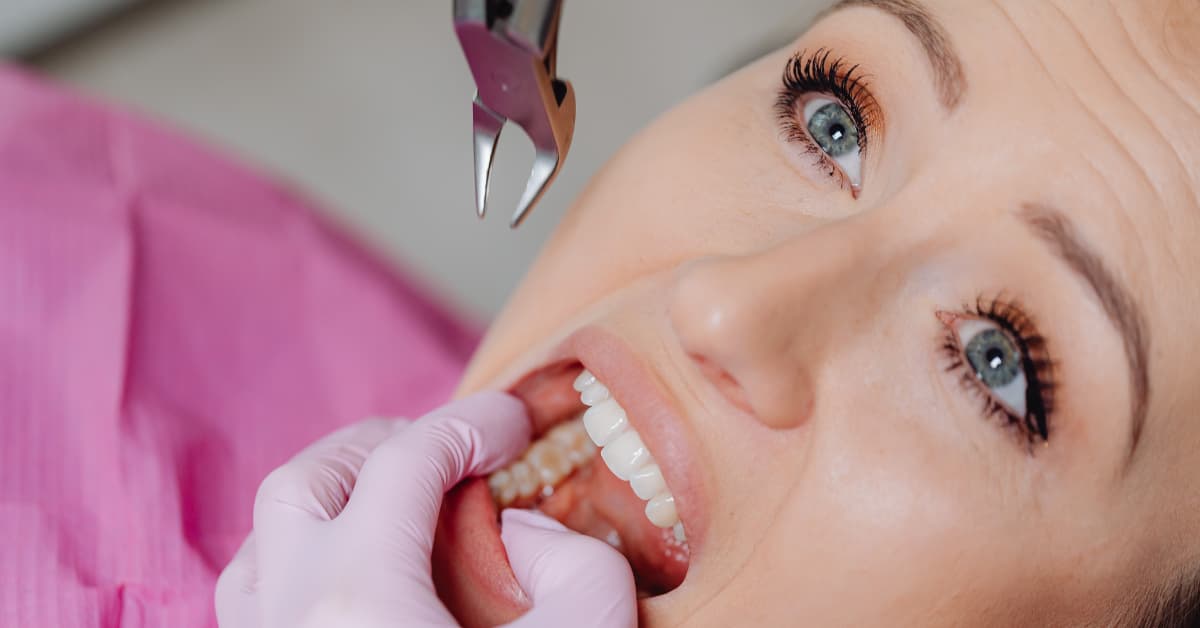
Yes, a dentist can pull an abscessed tooth when extraction is the right treatment. Dentists remove teeth that can’t be saved every working day, and this Cleveland Clinic extraction guide walks through the procedure itself. The harder question is whether yours is one of those teeth. That hangs on how much sound structure is left, how far the infection has traveled, what your symptoms are doing, and the rest of your health.
Root canal therapy saves some of these teeth. Others are past saving and need to come out properly. What you shouldn’t do is wait it out, and you definitely shouldn’t try to pull it yourself. An abscess doesn’t clear on its own, and a course of antibiotics can knock the infection back without ever touching the source inside the damaged tooth.
When a Tooth Can Be Saved—and When It Cannot
An abscess can be obvious or oddly quiet. A steady throb is one version. A sour taste, tenderness on one bite, or a patch of swelling is another. Fever and sensitivity may join in. Sometimes the pain fades after the abscess drains or the nerve dies; that is relief from pressure, not proof of healing.
The treatment decision path
First comes the exam itself. Tooth, gums, swelling, how much sound structure remains, and the pattern the infection is following. X-rays fill in what the eye can’t reach, mainly the roots and the bone around them.
A tooth with enough healthy structure left may be a root canal candidate. Clearing the infection from inside the canal system can let the tooth be restored and kept.
Some teeth are past that point. Then the work is a planned extraction, whole tooth out, surrounding tissue protected, infection managed along the way.
This part is simple: trouble breathing or swallowing, major swelling in the face or mouth, symptoms around an eye, or a rapid decline belongs in emergency care.
Why a Home Extraction Can Go Sideways
At home, there is no X-ray to show the roots and no one prepared to numb the area properly or stop difficult bleeding. Household tools are not sterile, and follow-up is nonexistent. Worse, the crown can snap off while infected roots stay buried under the gum. That is how the dangers of pulling an abscessed tooth turn a painful problem into a harder procedure.
Seven risks at a glance
The piece you can see is not the whole problem; infection can extend well past it.
Roots or fragments can snap off and stay in the socket.
Delay and torn tissue can let the infection get worse.
There is no safe way to judge the anatomy or handle a complication mid-attempt.
Neighboring teeth, gums, bone, nerves, even sinus structures can be injured.
Nothing available at home comes close to real anesthesia or pain control.
A botched attempt can turn a straightforward extraction into a harder one.
Removing the Crown Does Not Remove the Whole Problem
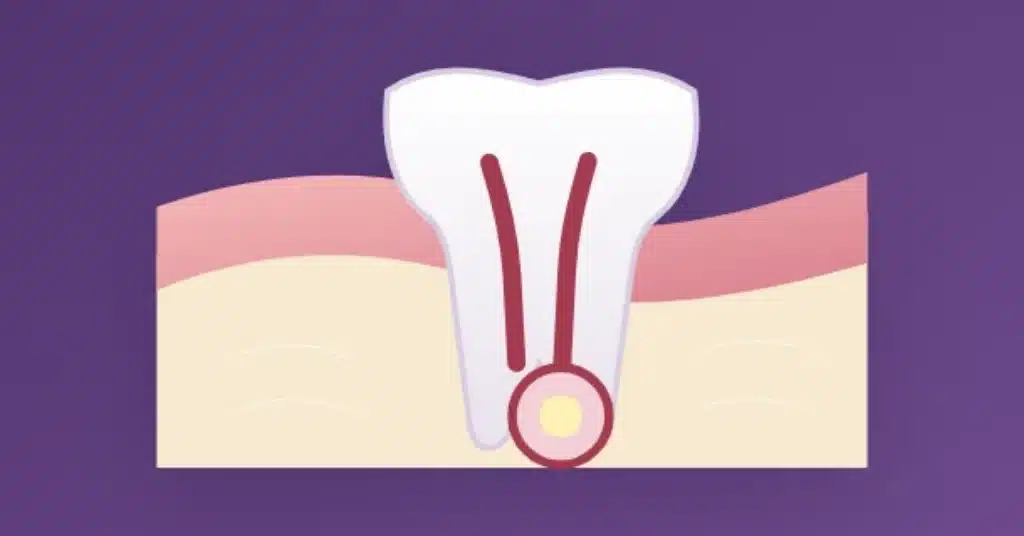
What you can grab is the crown. What’s infected can sit much deeper, inside the canal system of the roots or around a root tip, below the gumline and set in bone. Snapping off the crown gets you the worst of both worlds. The roots haven’t moved, and on top of them there’s now an open wound that nobody planned to drain, disinfect, or close.
The part you can grab
Crown above the gum
The crown is one piece of a larger structure. Nothing about pulling or breaking it reveals the state of the roots.
The part that needs a look
Roots, bone, and the tissue between
The exam and the X-rays are what answer this. Root shape, whether bone is involved, what needs draining, and whether restoring the tooth is realistic.
Where treatment aims
The source of infection
The diseased tooth itself is the target, whether by root canal treatment or by complete professional extraction. Other care gets added when it’s clinically needed.
Root Canal, Professional Extraction, and Other Care
If the tooth still has a strong enough shell and good support, root canal treatment may be worth doing. The infected center is removed; the canals are cleaned and sealed; then the tooth is repaired, often under a crown. Our guide to root canal treatment and cost explains the procedure and the factors behind its price.
Sometimes the math runs the other way. A tooth that’s badly broken, whose long-term outlook is poor, or that no restoration would hold together predictably makes professional extraction the likelier recommendation. Planning one properly means thinking past the tooth itself, to the socket it leaves and to whatever might eventually fill the gap, if you decide you want a replacement. Fees move with procedure complexity and sedation; our guide to tooth-removal cost factors explains how.
Drainage and medication are supporting players, useful in selected cases. For most pulpal and periapical conditions, the American Dental Association’s 2019 guideline puts definitive dental treatment first and holds antibiotics in reserve for situations such as systemic involvement. Antibiotics by themselves repair nothing in the tooth and leave the source in place.
What Happens to the Abscess After the Tooth Is Pulled?
Once the whole diseased tooth is out, a major engine of the infection goes with it. During the visit the dentist can open or maintain drainage, clean the area if it needs it, and weigh whether medication adds anything. Healing after that is a joint effort between your immune system and whatever follow-up care was planned.
A socket takes time to close, and some soreness or swelling belongs to the first few days. A worsening pattern does not. Fever, fresh drainage, a bad taste, or pain and swelling that are heading the wrong way? Ring the office. A sharp return of pain several days after it had eased is another reason to call; that pattern can point to dry socket instead of normal granulation tissue.
Why Dentists Take a Spreading Infection Seriously
With treatment, an abscess usually stays local. Without it, infection beneath the tongue can become Ludwig’s angina. Bacteria can also enter the bloodstream and trigger sepsis. Those outcomes are uncommon, but they are why delay matters. Pulling the tooth yourself prevents neither and creates another wound.
Do not wait for a dramatic change before calling a dentist. For local options, see our Henderson guide to an abscessed-tooth emergency.
Know when to leave the dental queue
Some symptoms need a hospital, not an appointment
Breathing feels different. Swallowing or speaking is difficult. Swelling is spreading quickly through the mouth, face, or neck, or it has reached an eye. Your vision changes, or you suddenly feel much worse. Any one of those is a reason to seek emergency medical care.
For urgent dental symptoms without these emergency signs, call our emergency dentist in Las Vegas or review our Henderson emergency dental service as soon as possible.
Before You Touch the Tooth, Let Us Look
The exam and X-ray tell us what your fingers cannot: whether the tooth is repairable and what is happening around its roots.
What You Can Do While Waiting for Dental Care
While you wait, do less—not more. If you can usually take a nonprescription pain medicine, use only the amount and timing on its label. Chew on the other side; a gentle saltwater rinse may feel good. Do not rest aspirin on the gum, poke the swelling, or keep wiggling the tooth to test it. Our guide to unbearable tooth pain has a few more ways to manage the wait.
Medical Sources Behind This Guide
Clinical guidance for this article comes from the American Association of Endodontists on abscessed teeth, the NHS on urgent symptoms, and Cleveland Clinic’s references for tooth abscesses and tooth extraction.
What Patients Usually Want to Know
The pain vanished overnight. Am I in the clear?
No. The pressure may have drained, or the nerve may have stopped responding. Either can quiet the tooth without clearing the infection. The exam shows whether a root canal can keep the tooth or whether removal is safer.
Do these symptoms belong in an emergency room?
If breathing, swallowing, or speech feels different, do not wait. Go for swelling that is racing into the face, neck, or eye area too, or for a vision change or sudden overall decline. Pain, fever, swelling, or drainage that keeps building still needs a quick dental call.
How rough is the first week after extraction?
Expect the first few days to be the sorest. Most people are through early recovery in about 7 to 10 days. An active infection or difficult extraction can slow things down; general health matters too. The bone continues healing after the gum closes.
Is this tooth still a root-canal candidate?
Possibly. It depends on whether enough sound tooth remains for a dependable restoration. If not, extraction is the more predictable route. Drainage or antibiotics can assist with infection control, but neither rebuilds the tooth.
Does an active abscess prevent extraction?
Not automatically. Dentists do remove infected teeth when that is the right treatment. The exam and X-ray reveal the tooth, roots, nearby tissue, and extent of the problem, which settles the question.
Why didn’t antibiotics finish the job?
They may calm a spreading infection or help when you feel ill. They cannot rebuild the damaged center of the tooth. A root canal, drainage, extraction, or some combination still has to deal with the source.
Is any infection left after extraction?
The whole diseased tooth takes the main source with it. The socket may still need cleaning or drainage, and medicine sometimes has a role. Call when pain, swelling, fever, or drainage rises instead of settling.
Why are dentists so firm about not pulling it at home?
Several risks land at once: hidden roots, bleeding you cannot control, a nonsterile site, and fragments left behind while infection continues. A breathing change or facial swelling that races upward belongs in emergency care.
A gum boil or pus showed up later—who do I call?
Phone the dentist and leave the area alone. Rising pain, fever, swelling, drainage, or a bad taste makes the call more urgent. After an exam, the answer may be cleaning, medication, another procedure, or simply reassurance.
Can the Tooth Stay?
An exam and X-ray are the shortest path to an honest answer.
This article cannot diagnose your tooth. That takes an in-person exam. If breathing changes or facial swelling is moving fast, use emergency medical care rather than waiting for a dental visit.