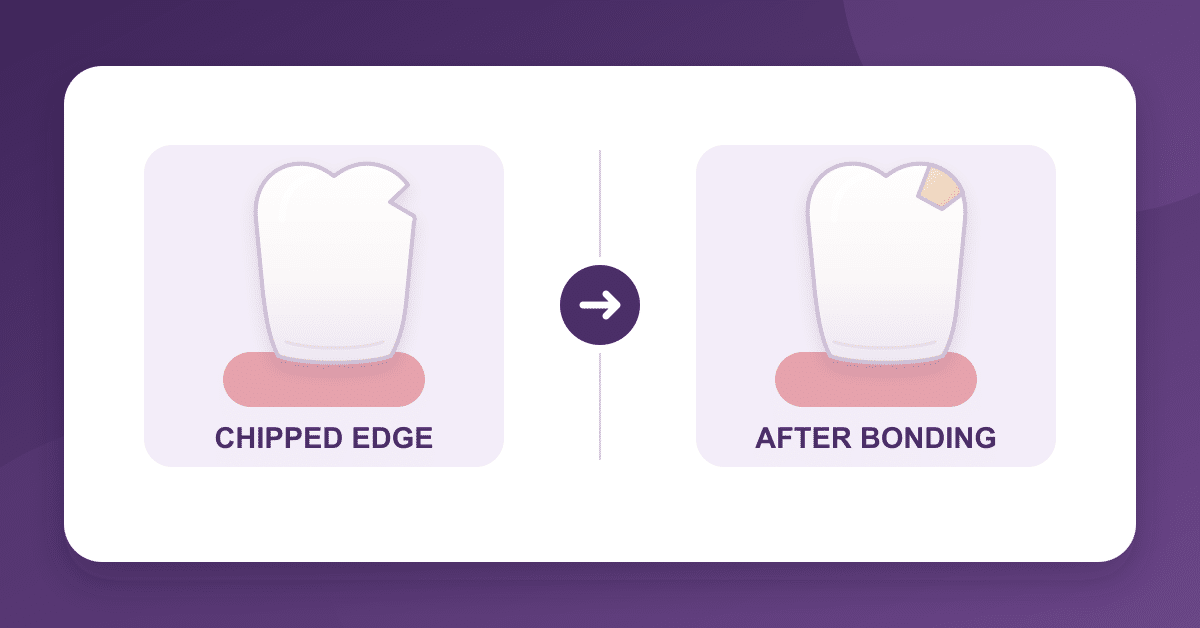
Composite bonding: is it the right fix for a chipped, uneven, or discolored tooth?
The short answer
It is quick, and in most cases the tooth itself is left largely alone.
It is also not the answer for every concern that looks similar in a mirror.
Bonding typically does not require enamel removal, which is why it can generally be reversed later.
The bonding material itself typically lasts three to 10 years before it needs to be touched up or replaced, and how long it holds depends on oral habits and how many teeth were treated.
Composite resin is somewhat stain-resistant but does not resist stains as well as porcelain, and it can chip.
If a front tooth chipped, a small gap has always bothered you, or one tooth looks darker than the rest, composite bonding is probably one of the first options you have read about. It is quick, and in most cases the tooth itself is left largely alone.
It is also not the answer for every concern that looks similar in a mirror.
You will see the same procedure called composite bonding, dental bonding, or teeth bonding. The dentist shapes a tooth-colored composite resin directly on the tooth and hardens it with a curing light.
What composite bonding can fix on a front tooth
Bonding is most useful for small, localized cosmetic changes:
Quick self-check
- Repairing chips or minor cracks
- Closing small gaps and spaces between teeth
- Changing the shape of a tooth that looks short, uneven, or worn at the edge
- Masking tooth discoloration
Most of these can be addressed in a single appointment, on one tooth or two.
Bonding is an option for small cosmetic changes. More dramatic changes may need other treatments, like porcelain veneers.
When another treatment has to come first
A tooth is not evaluated in isolation. Cavities, severe decay, gum disease, or another significant oral health problem needs treatment before bonding goes on a tooth.
A larger crack, significant wear across several teeth, structural damage, or a change that would essentially cover the whole front of the tooth calls for a different restoration.
What a teeth bonding appointment looks like
Your dentist starts by matching a resin shade to the surrounding teeth using a shade guide.
The tooth surface is then roughened and a liquid is applied so the resin will hold.
The composite resin, putty-like at this stage, is applied, molded, and smoothed into shape.
A curing light hardens it and bonds it to the tooth.
Final adjustments and polishing bring the surface into line with the neighboring teeth.
The appointment runs about 30 to 60 minutes per tooth.
Does bonding remove enamel or damage the tooth?
Composite bonding
Bonding typically does not require enamel removal, which is why it can generally be reversed later. The word typically matters. If a tooth carries an existing filling, old composite, decay, or a rough surface that has to be cleaned back to sound structure, some preparation is needed. Bonding placed over an existing restoration is not the same as bonding placed on sound enamel.
Porcelain veneers
Porcelain veneers are different. A veneer is a shell, and a small amount of enamel is removed from the tooth to accommodate it.
Composite veneers may require less enamel removal and fewer visits than porcelain, and are easier to fix if damaged, but are not as stain- or wear-resistant. That difference is one reason a dentist often suggests bonding first when the change is small.
Sensitivity and downtime
Short-term sensitivity is possible after bonding. There is typically no downtime, and normal activities resume the same day. If the sensitivity lingers, an edge feels sharp, or your bite feels off, call the office rather than waiting it out.
How long dental bonding lasts
There is no single number. The bonding material itself typically lasts three to 10 years before it needs to be touched up or replaced, and how long it holds depends on oral habits and how many teeth were treated. Bonding is also not as long-lasting as veneers or crowns.
Longer-term research shows the same spread. A systematic review published in Dental Materials evaluated 1,821 composite restorations and found a total failure rate of 24.1 percent. Annual failure rates ranged from 0 to 4.1 percent, and survival rates ranged from 53.4 percent to 100 percent.
The most common reason for failure was fracture of the tooth or the restoration. When bonding was done for cosmetic reasons, the problems that led to redoing it were more often color, shape, and surface stain.
Staining, chipping, and daily care
Composite resin is somewhat stain-resistant but does not resist stains as well as porcelain, and it can chip. If it does chip, though, it is easier to repair than porcelain.
Day-to-day, you care for a bonded tooth the way you care for the rest of your teeth. Brush at least twice a day with a soft toothbrush and fluoride toothpaste, floss between the teeth once daily, and use an alcohol-free mouthwash.
The habits that cause trouble for bonding are biting your fingernails, chewing on pens, and using your teeth to open packages. If a bonded tooth feels sharp against your tongue or lip, or your bite feels different, call the office. Small repairs handled early are simpler than a full replacement later.
Choosing between bonding, veneers, and dental crowns
The right choice depends on what the tooth actually needs. For a small chip, a small gap, a minor shape change, or localized discoloration on a healthy tooth, composite bonding is usually where the conversation starts. It goes on directly, generally with little or no enamel removal, and can be repaired later without redoing the whole restoration.
| Comparison | Composite bonding | Porcelain veneers | Dental crowns |
|---|---|---|---|
| Best for | Small chips, small gaps, minor shape changes, localized discoloration on a healthy tooth | Several front teeth that need to match; larger cosmetic changes | A tooth that needs to be covered rather than resurfaced (details on the crown vs veneer cost page) |
| Enamel removed | Typically none | A small amount, to fit the shell | See crown vs veneer cost page |
| Visits | Usually one appointment | Typically more than one | See crown vs veneer cost page |
| Typical lifespan | 3 to 10 years before touch-up or replacement | Ask at your evaluation | Ask at your evaluation |
| Stain and wear resistance | Somewhat stain-resistant; less than porcelain | Higher than composite | Ask at your evaluation |
| If it chips | Easier to repair than porcelain | Harder to repair than composite | Ask at your evaluation |
| Cost context (national) | $431 average, $288–$915 range, per CareCredit’s 2024 study | See crown vs veneer cost | See crown vs veneer cost |
National figures are context only, not a quote from Comprehensive Dental Care.
Porcelain veneers make more sense when several front teeth need to match, or when the finish has to keep its color and surface across all of them for years. Veneers require a small amount of enamel to be removed, and they resist stain and wear better than composite.
Dental crowns are a fuller restoration, for a tooth that needs to be covered rather than resurfaced. The crown vs veneer cost comparison walks through those two options.
What teeth bonding tends to cost
Bonding is usually one of the less expensive cosmetic treatments, and the price depends on the tooth, how many teeth are involved, and where you live. For a rough national picture, CareCredit’s summary of a 2024 cost study puts "the national average cost for teeth bonding is $431, but the cost ranges between $288 and $915," and adds that actual cost varies by geography, provider, and other variables. That is a national figure, not a Comprehensive Dental Care fee. What bonding costs here, how insurance handles it, and the ways to pay for it are covered in the teeth bonding cost article.
Insurance comes down to why the tooth is being treated. If bonding is repairing damage, CareCredit’s summary says it "may be partially or fully covered by your insurance (depending on your deductible) if you’re getting the procedure to fix structural issues like chipped or cracked teeth."
If the reason is purely cosmetic, the answer is usually no: "if you’re getting dental bonding for purely cosmetic purposes (e.g., to close a small gap between your teeth), most dental insurance plans won’t cover it." A quick call to your plan tells you which applies to you.
What a bonding evaluation in Henderson involves
An evaluation is short. The conversation covers whether bonding is the treatment that fits, whether another step should come first, or whether the change would be better handled by a different restoration.
The dental bonding service page is the place to request an appointment. You can also call the office at (702) 735-3284, or visit us at 2790 W Horizon Ridge Pkwy #100, Henderson, NV 89052. The before and after photos on the site are the work of Dr. Gregg C. Hendrickson.
Ready to have your tooth evaluated?
An evaluation is short. The conversation covers whether bonding is the treatment that fits, whether another step should come first, or whether the change would be better handled by a different restoration.
Common questions about composite bonding
The procedure and the tooth
Will bonding damage the enamel on my tooth?
On sound enamel, bonding typically does not require enamel removal, which is why it can generally be reversed later. On a tooth that has an existing filling, old composite, or decay, the dentist has to clean the surface back to sound structure before the resin will hold.
How long does composite bonding last?
The bonding material typically lasts three to 10 years before a touch-up or replacement, and oral habits and the number of teeth treated shift that range. A systematic review of 1,821 composite restorations shows a wider spread in practice, with survival rates ranging from 53.4 to 100 percent. Fracture of the tooth or restoration is the most common reason bonding fails.
Can bonded teeth stain or chip?
Yes. Composite does not resist stain as well as porcelain, and it can chip. Chipping tends to follow habits like biting fingernails, chewing on pens, or using teeth to open packages rather than normal eating.
After the appointment and over time
When should I call about a bonded tooth?
Call if a bonded tooth feels sharp against the tongue or lip, or if the bite feels different than it did leaving the office. Catching a rough edge or a high spot early is a quick fix.
Bonding or porcelain veneers?
For a small change on one or two healthy teeth, bonding is usually the first option discussed. When several front teeth need to match, or the finish has to hold up for years, veneers are worth a look. That call gets made at the examination.
Does insurance cover composite bonding?
Coverage usually depends on whether the work is a repair or purely cosmetic. Bonding done to repair a chipped or cracked tooth may be partially or fully covered under some plans. Bonding done purely to close a small cosmetic gap usually is not.