Frequent Dental Cleanings: Why Twice a Year Isn’t Enough for Some Henderson Patients
Your hygienist recommended cleanings every three months. You thought everyone goes twice a year – why are you different?
This moment of confusion happens regularly in my Henderson office. A patient finishes a cleaning, expects to schedule the standard six-month recall, and instead hears that we want to see them in 90 days. Sometimes there’s an edge of defensiveness to the response – a sense that more frequent visits means something was done wrong, or that the practice is trying to generate extra appointments.
Neither is true. The recommendation for more frequent dental cleanings in Henderson patients with certain risk factors is grounded in the biology of how periodontal disease progresses – and more specifically, in how quickly it can return once it’s been treated. For patients who’ve been through periodontal treatment, or who carry specific systemic risk factors, a three or four-month cleaning schedule isn’t excessive. It’s the minimum interval that keeps the disease from quietly advancing between visits.
This article explains the clinical reasoning behind that recommendation, who it applies to, and what the insurance and cost reality actually looks like.
Two Different Types of Dental Cleanings
The first thing to understand is that not all dental cleanings are the same procedure – and the terminology matters for understanding your treatment plan and insurance coverage.
Prophylaxis – what most people picture when they think “dental cleaning” – is a preventive procedure for patients with healthy gums and no significant periodontal disease history. The hygienist removes surface deposits, polishes teeth, and checks for early signs of problems. This is appropriate for patients with healthy pocket depths, minimal bone loss, and no active infection. Twice a year is the standard frequency for this population because that interval is sufficient to prevent significant plaque accumulation in low-risk patients.
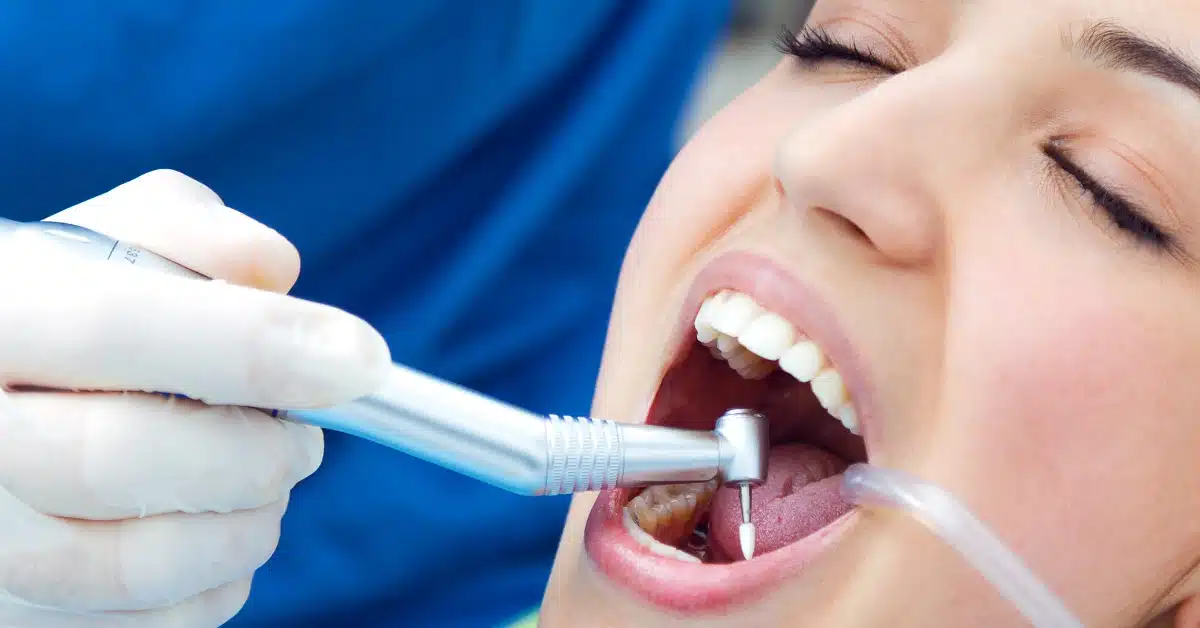
Periodontal maintenance is a different procedure entirely. It’s performed on patients who have been treated for periodontal disease – whether through scaling and root planing, periodontal surgery, or other active therapy. The hygienist cleans deeper below the gumline, monitors pocket depths at each visit, reassesses bone levels, and checks the sites where disease was previously active. It’s not the same as a standard cleaning, and it’s not coded the same way on dental insurance claims.
Once a patient has been diagnosed with and treated for periodontal disease, they graduate from prophylaxis to periodontal maintenance – and they stay in that category. This isn’t punitive. It reflects the permanent change in disease risk that comes with a periodontal diagnosis. The gum tissue architecture has changed. The bacterial environment in those pockets is different. The maintenance requirements are different.
For my Henderson patients in this category, every cleaning they receive going forward is periodontal maintenance, not a standard cleaning. The frequency – typically every three to four months – is calibrated to the biology of how bacteria behave in periodontal pockets.
The 90-Day Bacterial Repopulation Cycle
The three-month interval isn’t arbitrary. It comes directly from research on how quickly disease-causing bacteria recolonize periodontal pockets after professional cleaning.
After scaling and root planing – the deep cleaning that removes bacterial deposits from root surfaces – the bacterial population in periodontal pockets drops significantly. The pockets become relatively clean. But bacteria don’t stay gone. They begin repopulating the pocket almost immediately, and studies tracking bacterial recolonization show that the pathogenic bacterial community returns to pre-treatment levels in roughly 90 to 120 days in susceptible patients.
This matters because periodontal disease is driven by that specific bacterial community reaching a critical population threshold. Below the threshold, the immune response in the gum tissue holds it in check. Above the threshold, the chronic inflammatory cycle that destroys bone and ligament tissue resumes. Three-month maintenance keeps bacterial populations below that threshold by disrupting the cycle before it can fully re-establish.
At six months – the standard healthy-patient interval – the pathogenic bacteria in a periodontitis-susceptible patient have had time to repopulate, recolonize root surfaces, and restart the inflammatory cascade. The hygienist is then cleaning up damage that could have been prevented. Studies comparing three-month and six-month maintenance intervals in periodontal patients consistently show better clinical outcomes – less bone loss progression, better pocket depth stability, fewer sites requiring retreatment – in the three-month group.
The science here isn’t contested. Three months is the evidence-based interval for periodontal maintenance patients, not a conservative or overly cautious position.
Risk Factors That Require More Frequent Cleanings
Periodontal disease history is the most common reason I recommend more frequent cleanings for Henderson patients, but it’s not the only one. Several systemic and behavioral factors affect how quickly disease-causing deposits accumulate and how aggressively the body responds to bacterial infection in gum tissue.
History of periodontal disease is the primary driver. Once you’ve had periodontitis – the stage where bone loss has occurred – your susceptibility is permanent. The bacterial community in your mouth doesn’t reset after treatment. The pockets that formed don’t fully close. The immune response pattern that allowed disease to develop in the first place remains. Periodontal maintenance is lifelong management of a chronic condition, not a temporary inconvenience until your mouth “heals.”
Diabetes has a well-documented relationship with periodontal disease that runs in both directions. High blood sugar impairs immune function, reduces the body’s ability to fight infection in gum tissue, and alters blood vessel integrity in ways that accelerate inflammation. Patients with diabetes – particularly those with less well-controlled blood sugar – experience more aggressive bacterial repopulation, more severe inflammatory responses, and slower healing after periodontal procedures. For my diabetic patients in Henderson and Las Vegas, three or four-month maintenance intervals are often warranted regardless of whether they’ve had active periodontal treatment, because the systemic risk factor alone accelerates disease progression.
Smoking suppresses the normal inflammatory bleeding response that would otherwise alert both patient and dentist to disease activity. Smokers often have worse periodontal disease than their clinical presentation suggests, because the masking effect of nicotine hides the visible signs. At the same time, smoking impairs healing, reduces circulation to gum tissue, and maintains a pro-inflammatory environment. Patients who smoke need more frequent monitoring because the standard clinical indicators are unreliable.
Aggressive calculus formation is a genetic tendency that some patients simply have. Calculus – hardened mineral deposits that bond to tooth surfaces – forms from the mineralization of dental plaque over time. Most patients accumulate it slowly enough that twice-yearly cleaning keeps it controlled. But some patients – through genetics, diet, saliva chemistry, or medication effects – mineralize plaque significantly faster. If your hygienist is removing substantial calculus at every appointment despite good home care, your biology may simply require more frequent professional removal to stay ahead of it.
Genetic susceptibility to periodontal disease independent of obvious behavioral risk factors explains why some patients with excellent hygiene develop periodontitis while others with poor hygiene never do. Certain genetic profiles produce more aggressive inflammatory responses to periodontal bacteria. Testing for these genetic markers exists and can inform treatment planning. For patients with known genetic susceptibility, more frequent maintenance is a preventive investment.
Cardiovascular disease, osteoporosis, and immunosuppressive conditions also intersect with periodontal health in ways that can justify more frequent maintenance. The relationship between oral bacterial load and systemic inflammation is increasingly well-supported by research. For patients managing complex health conditions, keeping periodontal bacterial counts low isn’t just about teeth – it’s part of broader health management.
What Actually Happens at Each Three-Month Visit
Periodontal maintenance appointments are more thorough than standard cleanings, which is partly why the frequency is necessary and why the same interval wouldn’t be justified for healthy patients who don’t need that level of monitoring.
At each maintenance visit in my Henderson practice, the hygienist or dentist performs a systematic assessment rather than just cleaning and moving on. The visit typically includes:
- Pocket depth re-measurement. Every tooth has six measurement points around it. Pocket depths are recorded and compared to previous measurements. Deepening pockets signal active disease progression. Stable or improving measurements confirm that maintenance is working. This baseline-to-baseline comparison is how we know whether the current interval is sufficient or whether we need to adjust the frequency or treatment approach.
- Site-specific subgingival debridement. Cleaning goes below the gumline at sites with deeper pockets or previous disease activity – not just a surface polish. The root surfaces in those pockets are where pathogenic bacteria recolonize and where calculus reforms first.
- Assessment of home care effectiveness. We evaluate where plaque is accumulating and where technique may be falling short. This guides specific coaching rather than generic “brush and floss more” advice.
- Review of systemic health changes. New medications, changes in diabetes management, health events since the last visit – all of these affect periodontal risk and treatment decisions. A three-month interval means we’re never more than 90 days behind on knowing what’s happening in your health overall.
- X-ray monitoring on the appropriate schedule. Bone level assessment through radiographs at appropriate intervals catches changes that aren’t visible in clinical examination alone.
The goal at every maintenance visit is the same: disrupt the bacterial population before it reaches the threshold that drives tissue destruction, identify any sites showing signs of disease activity early enough to intervene before the damage is significant, and calibrate the ongoing maintenance plan to what your mouth is actually doing.
Insurance Coverage: What Henderson Patients Should Know
The insurance question comes up in almost every conversation about more frequent cleanings. The concern is understandable – dental insurance isn’t cheap, and finding out that your plan may not automatically cover four cleanings a year creates real financial anxiety.
Here’s the realistic picture for Henderson and Las Vegas patients.
Most dental insurance plans do cover periodontal maintenance visits – typically coded D4910 – at a different benefit level than standard prophylaxis (D1110). Many plans cover three to four maintenance visits per year for documented periodontal patients. The key phrase is “documented periodontal patients” – the coverage is tied to the diagnosis and treatment history in the records, not just the frequency of visits. When periodontal maintenance is billed with proper documentation of the periodontal diagnosis and prior treatment, most insurance companies process it appropriately.
The coverage rate varies significantly by plan. Some plans cover periodontal maintenance at 80%, some at 100%, some apply it to the same frequency limitations as preventive cleanings. The only way to know what your specific plan covers is to verify benefits directly – which my Henderson office does as a standard step before scheduling maintenance sequences.
What patients sometimes encounter is a plan that covers two prophylaxis visits per year and doesn’t have a separate periodontal maintenance benefit – or that applies frequency limitations that restrict coverage to twice yearly regardless of the diagnosis. This is a real coverage gap that exists in some plan designs. When it happens, the decision about whether to maintain the three or four month interval becomes a direct cost consideration.
My honest position: coverage limitations don’t change the clinical recommendation. They change the cost math. A patient whose insurance covers only two visits per year still needs four-per-year maintenance if their disease risk requires it. The question becomes whether the out-of-pocket cost for the additional visits is justified given the alternative – which is allowing disease to progress to the point of requiring retreatment.
The Cost-Benefit Reality
This calculation is worth doing explicitly because the numbers are more favorable than most patients expect.
Periodontal maintenance visits in the Henderson and Las Vegas area typically run $150 to $200 per appointment. Four visits per year – the maximum frequency most periodontal maintenance patients require – means a total annual cost of $600 to $800 before insurance. After typical insurance contributions on plans with periodontal maintenance benefits, out-of-pocket costs for many patients run $150 to $300 per year for four visits.
The alternative when maintenance lapses or intervals stretch beyond what the biology requires:
- Scaling and root planing retreatment for a full mouth typically costs $800 to $1,500 at a Henderson dental office, depending on severity and how many quadrants require treatment. This is the direct retreatment cost when disease reactivates.
- Periodontal surgery for sites that don’t respond to non-surgical retreatment runs $2,000 to $4,000 or more depending on the extent of involvement. Not every patient who lapses on maintenance will need surgery – but patients with aggressive disease who stop maintenance are at meaningful risk.
- Tooth loss and implant replacement represents the endpoint of unmanaged periodontitis. A single dental implant in Las Vegas or Henderson currently costs $3,500 to $5,500 including the crown. Losing multiple teeth to periodontitis is a six-figure restoration scenario.
The break-even math on maintenance is stark. If four annual maintenance visits prevent one episode of full-mouth scaling and root planing retreatment every three years, the maintenance is cost-neutral. If it prevents one implant over a patient’s lifetime, the maintenance program has saved $3,500 to $5,500 in a single prevented expense – far exceeding decades of maintenance costs.
This isn’t hypothetical. I see the consequences of deferred maintenance regularly in my Henderson practice – patients who went a year or two without their maintenance visits because of coverage gaps or schedule disruptions, who return with disease that has silently progressed and now requires retreatment. The cost of that progression is always higher than the maintenance that would have prevented it.
Individualized Care: Your Interval Is About You
The twice-a-year standard exists because it’s appropriate for a large population of healthy patients. It was never meant to be universal, and it shouldn’t be applied uniformly to patients whose disease risk sits above the baseline.
The right cleaning interval for any individual patient depends on their specific combination of risk factors, their disease history, their response to previous treatment, the pattern of bacterial repopulation in their particular pockets, and their systemic health status. Some of my Henderson patients need three-month intervals indefinitely. Some stabilize well enough that we can cautiously extend to four months after years of demonstrated stability. Some need a more intensive initial period of monthly or six-week visits while we get active disease under control before transitioning to standard maintenance intervals.
The recommendation is calibrated to what your mouth is actually doing – not to what’s most convenient, not to what insurance covers most easily, and not to a one-size schedule that ignores everything we know about your specific periodontal history and risk profile.
If you’ve been told you need more frequent cleanings and you’re not sure why, that conversation deserves a clear explanation. At Comprehensive Dental Care in Henderson, we take the time to walk through the reasoning – what we’re seeing in your pocket measurements, what your disease history means for your maintenance requirements, and what the realistic coverage and cost picture looks like for your specific situation. Call us at (702) 735-2755 to schedule an evaluation or discuss your current maintenance plan.
Frequently Asked Questions About Frequent Dental Cleanings
Why do some people need dental cleanings every three months?
Patients with a history of periodontal disease, diabetes, smoking, or aggressive calculus formation often need three-month professional dental cleaning intervals because disease-causing bacteria repopulate periodontal pockets in roughly 90 days. Waiting six months allows bacterial populations to reach the threshold that drives bone and tissue loss. More frequent cleanings disrupt this cycle before damage can resume.
Is periodontal maintenance the same as a regular cleaning?
No. Periodontal maintenance (dental code D4910) is a more thorough procedure that includes subgingival debridement at previously diseased sites, systematic pocket depth measurement and comparison, and monitoring of bone levels over time. A standard prophylaxis (D1110) is a preventive cleaning for patients without active or historical periodontal disease. Once a patient has been treated for periodontitis, they receive periodontal maintenance at all subsequent visits – not standard prophylaxis.
Will my insurance cover four dental cleanings per year?
Many dental insurance plans cover three to four periodontal maintenance visits per year when the patient has a documented history of periodontal disease and the visits are coded as D4910 rather than standard prophylaxis. Coverage rates and frequency limitations vary significantly by plan. Verifying your specific benefits before scheduling is the most reliable way to understand what your plan covers and what out-of-pocket costs to expect.
What happens if I skip my three-month dental cleanings?
In patients who require three-month intervals, extending to six months allows pathogenic bacteria to repopulate periodontal pockets fully and restart the inflammatory cycle that destroys bone and ligament tissue. Over time, skipped maintenance visits lead to disease reactivation, deeper pockets, further bone loss, and eventually the need for retreatment – scaling and root planing, periodontal surgery, or in severe cases, tooth loss requiring implant replacement. The cost of retreatment consistently exceeds the cost of the maintenance visits that would have prevented it.
How do I know if I need more frequent dental cleanings?
If you’ve been diagnosed with and treated for periodontal disease (periodontitis), you almost certainly qualify for periodontal maintenance at three to four month intervals. Other indicators include diabetes, a history of heavy calculus buildup despite regular cleaning, a family history of gum disease, or a prior recommendation from a dentist or periodontist for more frequent monitoring. A current periodontal evaluation with pocket depth measurements and X-ray review can determine where your gum health currently stands and what maintenance interval is appropriate.
Can I go back to twice-yearly cleanings after periodontal treatment?
In most cases, no – or at least not without significant demonstrated stability over many years. Periodontitis is a chronic condition, not an acute one that resolves with treatment. The susceptibility to bacterial recolonization and inflammatory bone loss persists after treatment. Some patients with very mild historical disease and excellent long-term stability may be able to extend to four-month intervals, but returning to standard twice-yearly prophylaxis is generally not appropriate for confirmed periodontal patients. Your dentist can evaluate your specific history and current status to determine what’s right for your situation.
Does my diabetes affect how often I need dental cleanings?
Yes, significantly. Diabetes impairs immune function and blood vessel integrity in ways that accelerate periodontal bacterial repopulation and worsen the tissue’s inflammatory response. Patients with diabetes – particularly those with less well-controlled blood sugar – are at substantially higher risk for periodontal disease progression and typically benefit from three to four-month maintenance intervals even without a prior periodontal diagnosis. The relationship runs both ways: periodontal disease also makes blood sugar harder to manage, so keeping oral bacterial load low is part of overall diabetes management.
What is the cost of more frequent dental cleanings in Henderson?
Periodontal maintenance visits in the Henderson and Las Vegas area typically run $150 to $200 per visit. Four visits per year totals $600 to $800 before insurance, with many plans covering a portion of periodontal maintenance visits for documented periodontal patients. When weighed against the cost of retreatment – $800 to $1,500 for scaling and root planing, $2,000 to $4,000 for periodontal surgery, or $3,500 to $5,500 per implant if teeth are lost – the maintenance investment is significantly lower than the cost of allowing disease to progress.