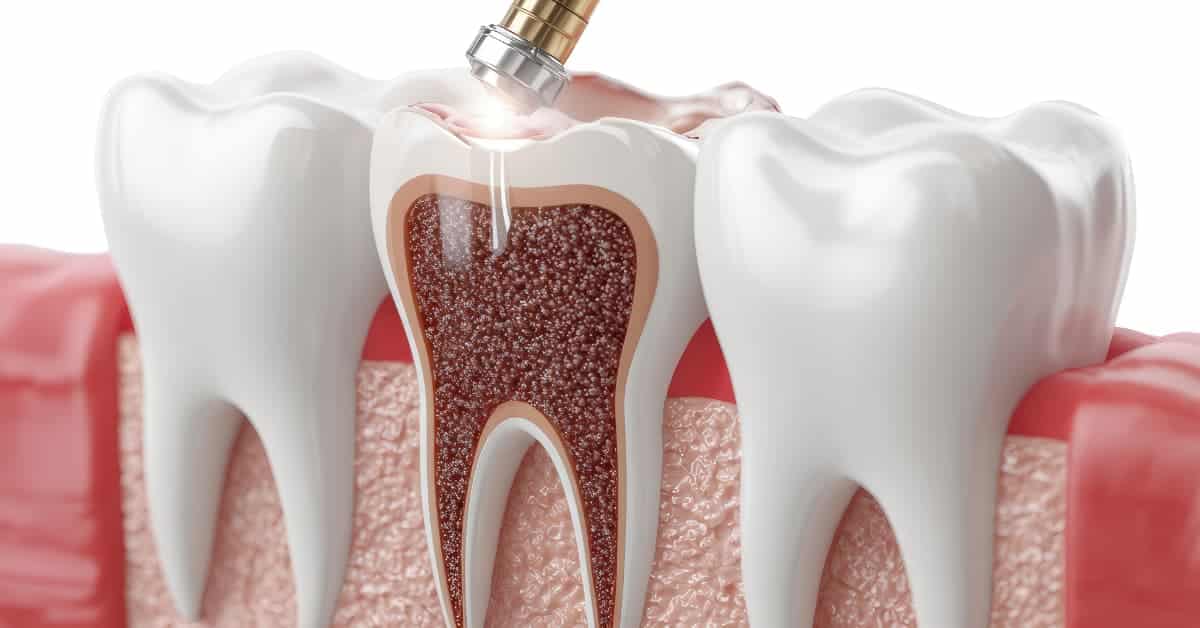
Scaling and Root Planing in Las Vegas: What to Expect from a Deep Cleaning
Last month, a patient walked into my Henderson office visibly nervous. Her regular dentist had just told her she needed a “deep cleaning” instead of her usual six-month cleaning. She was confused, worried about the cost, and honestly questioning whether it was really necessary or just an expensive upsell.
I see this reaction almost daily. After 20 years of practicing dentistry in Las Vegas, I’ve learned that the term “deep cleaning” triggers more anxiety than almost any other dental procedure – often because patients don’t understand what it actually involves or why their mouth suddenly needs more than a regular cleaning.
Here’s what I told her, and what I want you to know: if your dentist recommends scaling and root planing, it’s because there’s a real problem developing below your gumline that a regular cleaning simply can’t address. This isn’t about selling you something you don’t need. It’s about stopping gum disease before it costs you teeth.
The Honest Difference Between Regular Cleaning and Deep Cleaning
Most patients assume all dental cleanings are basically the same procedure. That’s not true, and understanding the difference matters for your oral health and your wallet.
A regular cleaning works above your gumline. Your hygienist removes plaque and tartar from the visible surfaces of your teeth and just slightly below where your gums meet your teeth. These cleanings prevent problems. They’re maintenance for healthy gums.
Scaling and root planing goes deeper – much deeper. We’re working below the gumline, sometimes several millimeters down into pockets that have formed between your teeth and gums. We’re removing bacterial colonies that have been living there for months or years. We’re treating active disease, not preventing it.
The key difference? Gum pockets. In a healthy mouth, the space between your tooth and gum measures 1-3 millimeters. When I measure 4mm or deeper during your exam, that’s a problem. Those deep pockets harbor bacteria that your toothbrush can’t reach. Regular flossing won’t get down there.
I measure these pockets during every exam using a small probe. It’s that part of your checkup where we call out numbers – “3, 3, 4, 5, 3” – while poking around your gums. Those numbers matter. When I see 4s and 5s, especially if your gums bleed when I probe, I know a regular cleaning won’t solve your problem.
Think of it this way: a regular cleaning is like washing your kitchen counters. Scaling and root planing is like deep-cleaning inside your cabinets where mold has started growing.
What Is Scaling and Root Planing?
Scaling and root planing actually involves two distinct procedures performed together:
Scaling is the removal phase. We use specialized instruments – sometimes ultrasonic scalers that vibrate and spray water, sometimes hand instruments – to remove hardened tartar from below your gumline. I’m going into those pockets we measured, sometimes 5-7 millimeters deep, and physically scraping away the calcified bacteria that have attached to your tooth roots.
This tartar isn’t like the soft plaque you can brush away. It’s rock-hard, cemented to your teeth, and it’s been releasing toxins that irritate your gums. That irritation is why your gums bleed when you floss or why you see pink in the sink when you brush.
Root planing is the smoothing phase. After we remove the bulk of the tartar, I smooth the surfaces of your tooth roots. Rough root surfaces act like velcro for bacteria – they make it easy for new colonies to attach and start the disease process all over again. By creating smooth surfaces, we make it harder for bacteria to re-establish themselves and give your gums a fighting chance to heal and reattach to your teeth.
Both procedures happen in the same appointment, but they serve different purposes. Scaling eliminates the existing infection. Root planing prevents it from coming back as aggressively.
I usually work on one or two quadrants of your mouth at a time. Your mouth is divided into four quadrants – upper right, upper left, lower right, lower left. If your gum disease is localized to just one area, we might complete everything in a single visit. But if you have pockets throughout your mouth, I’ll typically schedule two appointments, treating one side of your mouth at each visit.
Why not do everything at once? Two reasons. First, numbing your entire mouth would leave you drooling and unable to eat or speak clearly for hours. Second, healing happens better when we treat smaller areas at a time. Your body can focus its healing response on one side of your mouth while the other side functions normally.
Signs You Actually Need This Treatment
Here are the clinical signs I look for when determining whether scaling and root planing is necessary:
Pocket depths of 4mm or greater. This is the most objective measure. Healthy tissue measures 1-3mm. Once we see consistent 4mm pockets or deeper, bacteria have created spaces where they’re protected from normal brushing and flossing.
Bleeding on probing. When I gently probe around your gums and see bleeding, that tells me there’s active inflammation. Healthy gums don’t bleed from gentle pressure.
Bone loss visible on X-rays. The bacteria release toxins that destroy the bone supporting your teeth. When I see bone loss on your X-rays, especially if it’s progressing from previous films, that confirms the disease has advanced beyond what a regular cleaning can address.
Gum recession or loose teeth. If your teeth look longer than they used to or feel slightly mobile, the bone loss has progressed significantly.
You might also notice persistent bad breath that doesn’t improve with brushing, red and swollen gums, or pain when chewing. But here’s what concerns me most: many people with significant gum disease have zero symptoms. The disease progresses silently.
If your dentist recommends scaling and root planing, ask to see your pocket depths. Ask to see your X-rays. You shouldn’t accept this treatment based solely on someone’s word. You should see the clinical justification for yourself.
What the Procedure Actually Feels Like
The biggest question I hear: “Is this going to hurt?”
Here’s my honest answer. With proper anesthesia, you shouldn’t feel pain during the procedure. You’ll feel pressure and vibration from the instruments, and you’ll hear some sounds that might be unsettling if you’re not expecting them, but actual pain should be minimal.
I use local anesthetic to numb the quadrants I’m working on – the same numbing medication we use for fillings. It blocks pain signals so you don’t feel the deeper cleaning. Most patients tell me the numbing injection is the most uncomfortable part of the appointment, and even that lasts only a few seconds.
During the procedure, you’ll feel me working. The ultrasonic scaler creates a vibrating sensation and sprays water to cool the area and flush out debris. When I switch to hand instruments for areas the ultrasonic can’t reach effectively, you’ll feel scraping pressure but not sharp pain. If you do feel discomfort, tell me immediately. I can add more anesthetic to specific areas.
The procedure typically takes 45 minutes to an hour per quadrant, depending on how much buildup we need to remove. Some patients fall asleep during the appointment once they realize it’s not painful. Others prefer to listen to music or podcasts through headphones.
After the anesthetic wears off – usually 2-3 hours later – your gums will feel sore. Not excruciating, but tender and sensitive. Think of it like the soreness you feel after a workout. Your gums have been through a significant cleaning, and they’re responding with inflammation as they start healing. This soreness typically peaks the first evening and improves significantly by the second day.
You might experience increased tooth sensitivity to cold for a few days. This happens because we’ve removed tartar that was covering exposed root surfaces. The sensitivity is temporary and usually resolves within a week as your gums heal and reattach to the cleaner tooth surfaces.
You might see slight bleeding when you brush for the first day or two. That’s normal. Your gums are healing. Just be gentle with your brushing and continue your oral hygiene routine. The bleeding should decrease quickly as inflammation reduces.
The Real Cost of Scaling and Root Planing in Las Vegas
In the Las Vegas area, scaling and root planing typically costs between $200-$400 per quadrant. That means if you need all four quadrants treated, you’re looking at $800-$1,600 for the complete procedure.
Why the cost difference from a regular cleaning? Deep cleaning requires more time – I’m spending 45-60 minutes per quadrant instead of 30 minutes for your whole mouth. It requires local anesthetic and specialized instruments.
Additional costs you might encounter include X-rays ($50-$300), which are often necessary before treatment. Some patients need antibiotic therapy after the deep cleaning – antibiotic chips cost an additional $50-$100 per site.
Most dental insurance plans cover scaling and root planing when it’s medically necessary for treating gum disease. Coverage typically ranges from 50-80% of the cost after your deductible. Insurance companies require documentation – your pocket depth measurements and X-rays showing bone loss.
If you don’t have dental insurance, ask about payment plans. Many dental offices work with financing companies like CareCredit that offer interest-free periods.
Here’s something important to consider: the cost of not treating gum disease is significantly higher. Untreated periodontal disease leads to tooth loss. Replacing missing teeth with implants costs thousands to tens of thousands of dollars. Treating the disease now is the most cost-effective choice.
Recovery and Aftercare
Most patients feel well enough to return to normal activities the same day. For the first 24-48 hours after treatment:
- Take ibuprofen or acetaminophen as needed. Most patients find 400-600mg of ibuprofen every 6 hours for the first day or two manages any soreness effectively.
- Eat soft foods for the first day. Skip anything crunchy, hard, or spicy. Stick with soups, smoothies, pasta, eggs, or yogurt.
- Avoid extremely hot or cold foods. Your teeth might be temporarily more sensitive after we’ve removed tartar covering the roots.
- Continue brushing, but be gentle. Use a soft-bristled toothbrush. It’s okay if you see a little blood the first couple times – that should decrease quickly.
- Resume flossing after 24 hours. Wait a day, then resume gentle flossing.
Call my office if you experience severe pain that doesn’t respond to over-the-counter medication, significant swelling, fever, or pus drainage. These complications are rare, but you should know what to watch for.
Most patients feel significantly better within 3-5 days. The initial tenderness subsides, and you’ll notice your gums look healthier.
Follow-Up Care: Why This Isn’t a One-Time Fix
After deep cleaning, I typically schedule patients for periodontal maintenance every 3-4 months instead of the standard six-month interval. Once you’ve had gum disease significant enough to require scaling and root planing, you’re at higher risk for recurrence.
Those deep pockets we treated will improve with healing – they might shrink from 5-6mm down to 3-4mm. But they’re unlikely to return to the 1-2mm measurements of someone who’s never had periodontal disease.
Your home care routine becomes even more critical. The success of this treatment depends more on what you do at home than what I do in the office. You need to brush twice daily with proper technique, floss every single day, and consider using an antimicrobial mouthwash if I recommend it.
Your Questions About Scaling and Root Planing
Do I really need this, or is my dentist just trying to make money?
Ask to see the clinical evidence. A legitimate recommendation should be supported by objective findings: pocket depths of 4mm or greater, bleeding on probing, visible bone loss on X-rays. If your dentist can show you these findings, the recommendation is valid.
What happens if I don’t do this treatment?
Untreated periodontal disease progresses. The bacteria continue destroying the bone that supports your teeth. Eventually, your teeth become loose and you start losing them. Gum disease is the leading cause of tooth loss in adults over 40.
Can I just get a regular cleaning if I haven’t been to the dentist in years?
No. Once you have periodontal disease diagnosed, it’s against professional ethical standards for a dentist to perform a regular cleaning. Regular cleanings are preventive procedures for maintaining health – not appropriate treatment for active disease.
Will my insurance cover this?
Most dental insurance plans cover scaling and root planing when it’s medically necessary, typically at 50-80% after your deductible. Your dentist will submit documentation to show the disease diagnosis.
How long do the results last?
That depends entirely on your home care and follow-up maintenance. With excellent oral hygiene and regular periodontal maintenance appointments, many patients maintain stable, healthy gums for years. Without proper maintenance, disease can recur within months.
Schedule Your Evaluation at Comprehensive Dental Care
If you’ve been told you need scaling and root planing, or if you’re experiencing any signs of gum disease – bleeding gums, persistent bad breath, receding gums, or loose teeth – schedule an appointment at our Henderson office. I’ll perform a thorough evaluation, measure your pocket depths, review your X-rays with you, and explain exactly what treatment you need and why.
We accept most major dental insurance plans and can provide a detailed cost estimate before any treatment begins. Our team will help you understand your coverage and explore payment options if needed.
Call us at (702) 735-2755 to schedule your consultation. Don’t let gum disease progress while you worry about cost or uncertainty about treatment. Let’s evaluate your situation, address your concerns, and create a treatment plan that protects your teeth for the long term.