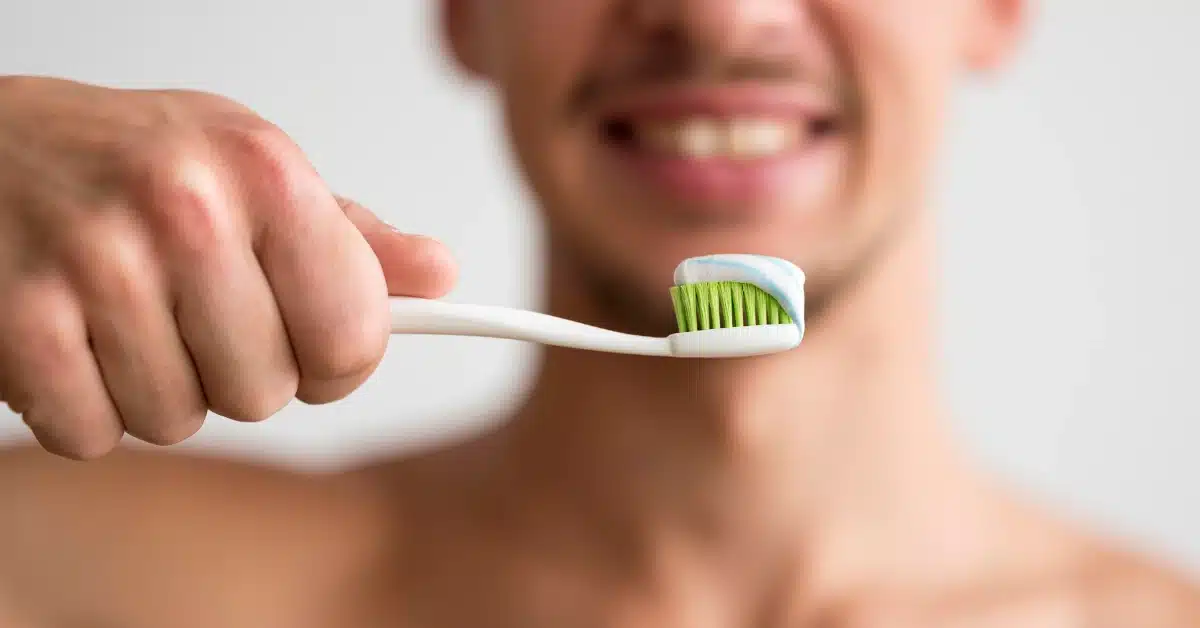
Electric vs Manual Toothbrush: What Your Las Vegas Dentist Really Recommends
The toothbrush aisle is overwhelming. Electric models cost $100 to $250. Your manual brush costs $4. Does it really matter?
I get this question constantly – in the chair, in the parking lot after appointments, sometimes via text from patients who are standing in Target trying to decide. And I understand the hesitation. The marketing around electric toothbrushes is aggressive. Sonicare, Oral-B, Quip – each brand promises a cleaner mouth and a brighter smile. It’s hard to separate the advertising from the actual clinical evidence.
So let me give you the honest version. Not the version that tries to sell you an expensive appliance, and not the contrarian “a $4 brush is fine” dismissal either. After seeing thousands of patients across my Henderson and Las Vegas practice over two decades, I have real observations about what people actually do with toothbrushes – and what the research says about electric vs manual toothbrush performance.
The short answer: electric toothbrushes do perform better on measurable clinical outcomes. The longer answer explains why, for whom, and whether the cost math actually works out.
What the Research Actually Shows
The evidence base here is stronger than it is for most dental product debates. A Cochrane Review – which synthesizes data across dozens of controlled trials – found that powered toothbrushes reduced plaque by 21% more than manual brushes after three months of use, and reduced gingivitis by 11% more over the same period. These aren’t marketing claims. Cochrane reviews are considered the gold standard of clinical evidence synthesis, and this one drew on studies involving thousands of participants.
That 21% plaque reduction number is worth pausing on. Plaque is the bacterial film that causes both cavities and gum disease. Reducing it by a fifth – consistently, across diverse populations and brushing habits – is a clinically meaningful difference. In my practice, I can often tell which patients use electric toothbrushes from their gum condition at recall appointments, before they’ve told me anything about their home routine.
A few additional findings from the research are worth knowing:
- Long-term benefits accumulate. Studies tracking patients over 11 years found that electric toothbrush users had less tooth loss and better periodontal health than manual brush users over time. The difference compounds.
- Electric brushes reduce brushing-related trauma. Patients who brush too aggressively – a surprisingly common problem I see in Las Vegas and Henderson patients – cause less gum recession and enamel abrasion with an electric brush, particularly those with pressure sensors.
- Timer compliance improves dramatically. The recommended brushing time is two minutes. Studies consistently show that the average person brushes for 45 to 70 seconds with a manual brush. Most electric brushes have built-in two-minute timers with 30-second quadrant alerts. This alone accounts for much of the performance difference.
The honest caveat: a manual toothbrush used with perfect technique for a full two minutes twice a day, with correct angulation and thorough coverage, can achieve results comparable to an electric brush. The problem is that almost nobody does that. Most people’s technique isn’t perfect. Most people don’t brush long enough. Electric toothbrushes compensate for human inconsistency in a way that manual brushes can’t.
Sonic vs Oscillating: What’s the Difference?
Once you decide to buy an electric toothbrush, you face another layer of choices. The two main technologies operate quite differently, and understanding the distinction helps you pick the right tool.
Oscillating-rotating brushes – the Oral-B category – use a small round head that rotates in one direction, then the other, while also pulsing slightly. The head is designed to be placed on one tooth at a time and guided around the mouth methodically. The scrubbing action is direct and mechanical. Multiple clinical studies specifically on oscillating-rotating technology show good plaque removal, and this category has more long-term research behind it than any other powered brush type.
Sonic toothbrushes – Sonicare’s technology – vibrate at high frequency (typically 31,000 strokes per minute or more) using a larger, more traditional brush head shape. The cleaning mechanism involves both direct bristle contact and hydrodynamic fluid activity – the rapid movement creates turbulence in the saliva and water around the brush that disrupts plaque slightly beyond where the bristles physically touch. Sonic brushes feel different to use: more like a traditional brushing motion with an intense vibration rather than a rotating action.
Which is better? Head-to-head studies show similar outcomes between the two technologies, with small advantages favoring one or the other depending on the study design and what’s being measured. The more important variable is which brush a patient will actually use correctly and consistently. Some people find the rotating Oral-B head easier to be methodical with; others find the Sonicare more comfortable and intuitive. I’ve seen excellent results from both in my patients.
Quip and similar subscription-model brushes fall into a separate category. They use a vibrating action and are positioned around convenience and cost. The clinical evidence for these is thinner than for Sonicare or Oral-B, but they’re meaningfully better than a manual brush for the same reason any powered brush is – the timer and the vibration both improve compliance.
Manual vs Electric: An Honest Comparison
Let me lay this out plainly rather than hedging everything with “it depends.”
The case for manual brushes is real. They’re inexpensive, available anywhere, require no charging, don’t break, and are perfectly capable of cleaning teeth when used correctly. They work fine for travel. Many dental professionals use them on themselves. If you have excellent technique, brush for two full minutes each session, and consistently cover every surface – including the backs of molars and along the gumline – a manual brush will serve you well. Some people genuinely prefer the tactile control of a manual brush and use it with better technique than they ever would an electric.
The case for electric brushes rests on one central reality: most people’s technique isn’t as good as they think it is. I’ve watched thousands of patients demonstrate how they brush. Common patterns I see regularly in my Henderson and Las Vegas patients include:
- Brushing too short. Thirty to sixty seconds feels like two minutes when you’re standing at the sink in the morning. It isn’t.
- Brushing the same areas repeatedly. People tend to focus on the front teeth they can see, while the back molars and the tongue-side surfaces get a fraction of the attention.
- Pressing too hard. Firm scrubbing feels thorough. It causes gum recession and abrasion over years.
- Wrong angle. The brush should be angled toward the gumline at about 45 degrees. Most people brush parallel to the teeth and miss the critical margin where plaque causes gum disease.
Electric toothbrushes don’t require perfect technique. The oscillating or sonic action does the work within each area – you mostly guide the brush to the right location and let the mechanics handle the rest. The built-in timer ensures two minutes. Pressure sensors (on higher-end models) alert you when you’re pressing too hard. The tool compensates for the human tendency toward inconsistency in a way that a manual brush simply cannot.
My honest clinical observation: the patients in my practice with the most consistently excellent home-care results either use electric toothbrushes, or they are the relatively rare individuals who have made genuinely deliberate, habitual effort to perfect their manual technique. Most people fall into neither category on their own.
Specific Recommendations for Different Patients
Electric toothbrushes aren’t uniformly better for every situation – but they’re the right answer for more patient types than people realize.
Patients with arthritis or limited hand dexterity – This is the clearest recommendation I make. If gripping and manipulating a thin toothbrush handle is difficult, or if the repetitive motion of brushing causes hand pain, an electric toothbrush is genuinely transformative. The handle is typically wider and easier to grip. You hold it in place and move it slowly around your mouth – the device does the scrubbing. For older patients in the Henderson and Las Vegas area managing arthritis, Parkinson’s disease, or post-stroke limitations, I consider this a near-requirement rather than a preference.
Braces wearers – Orthodontic brackets and wires create multiple surfaces and recesses where plaque accumulates and standard brushing motions miss. Electric toothbrushes, particularly oscillating-rotating models, work more effectively around brackets. Some Oral-B brush heads are specifically designed for orthodontic use. I consistently see better periodontal health in braces patients who use electric brushes compared to those who use manual brushes during treatment.
Aggressive brushers – If you’ve been told you’re brushing too hard, or if you’ve noticed gum recession or sensitivity along your gumline, an electric brush with a pressure sensor is the right answer. Oral-B’s IO series and Sonicare’s DiamondClean both have sensors that alert you when you’re pressing too hard. This feedback loop is genuinely effective at breaking the habit.
Seniors – As we age, dexterity changes subtly, technique often becomes less thorough, and the consequences of gum disease and decay compound on teeth that have accumulated decades of wear and existing restorations. For my patients over 65, I strongly lean toward recommending an electric toothbrush. The timer compliance alone is valuable – studies show that older adults are among the most likely to have good hygiene intentions but drifting brushing duration.
Children – Kids’ electric brushes (appropriately sized) with timers and fun features improve brushing duration and compliance significantly. If your child resists brushing or rushes through it, a child-sized electric brush often changes the dynamic. That said, adult supervision of technique still matters regardless of the brush type.
Patients with a history of cavities or gum disease – If you’ve had periodontal treatment, multiple restorations, or you’re managing active gum disease, the performance difference between electric and manual is more clinically significant for you than for someone with healthy teeth and gums. The 21% additional plaque reduction matters more when there’s less margin for error.
Patients with genuinely excellent technique and consistent habits – Manual brushes are fine. You’re in a small minority, but you exist. If your recall appointments consistently show excellent gum health, minimal plaque, and your dentist isn’t asking you to change anything – your current approach is working.
Dr. Hendrickson’s Personal Recommendation
I use an oscillating-rotating Oral-B brush. I’ve used one for years. For most of my patients who ask me to cut through the marketing and just tell them what to buy, that’s where I start.
The research base for oscillating-rotating technology is the deepest of any powered brush category – more long-term studies, more comparison trials, more years of clinical observation. The round head design makes it easy to be systematic and methodical, one tooth at a time. And the pressure sensor on most current Oral-B models addresses one of the most damaging habits I see in patients.
For patients who find the rotating sensation uncomfortable or who prefer a more traditional brushing feel, Sonicare is an excellent alternative. The DiamondClean or ProtectiveClean lines are well-supported by clinical data and used widely by dentists themselves. I don’t have a strong objection to Sonicare – I have a mild preference for the oscillating research literature, but the gap in real-world outcomes between the two is small.
What I’d steer most patients away from is spending $250 on a premium model when a $70 to $100 mid-range electric brush does the same clinical job. The features that matter – timer, pressure sensor, replacement head compatibility – are present in mid-range models. The premium price buys you travel cases, Bluetooth connectivity, and design features that have minimal impact on how clean your teeth get.
The Cost Math: Does Electric Pay Off?
Value-conscious patients ask about this frequently, and the math is worth doing honestly.
A solid mid-range electric toothbrush – Oral-B Pro 1000 or Sonicare ProtectiveClean 4100, both clinically well-supported entry points – runs about $40 to $70 on sale. Premium models like the Oral-B IO or Sonicare DiamondClean cost $150 to $250. Replacement brush heads run approximately $8 to $10 each and should be replaced every three months, putting annual head replacement at roughly $30 to $40.
Manual toothbrushes at $3 to $4 each, replaced every three months as recommended, cost about $12 to $16 per year – though many patients replace them less often than they should.
The comparison for a mid-range electric purchase looks like this:
- Year 1: $60 brush + $35 heads = $95 total vs. $14 manual brushes
- Year 2: $35 heads only vs. $14 manual
- Year 3: $35 heads vs. $14 manual
- Break-even point: Approximately year 3, after which the electric brush costs only about $21 more per year than manual
For a premium $150 brush, break-even comes around year 5 to 6 depending on replacement head frequency.
The calculation I’d actually encourage patients to consider: what does one cavity cost? One filling runs $150 to $300 depending on size and material. One periodontal scaling and root planing treatment – the deep cleaning required when gingivitis advances to periodontitis – typically costs $800 to $1,500 for a full mouth at a Las Vegas or Henderson dental office. A $60 electric toothbrush that meaningfully reduces your plaque levels and gum inflammation for years is genuinely cost-effective preventive care when measured against avoided treatment.
This isn’t a sales pitch for electric brushes – it’s the same math I apply to my own family’s dental care decisions.
Frequently Asked Questions About Electric vs Manual Toothbrushes
Are electric toothbrushes actually better than manual?
Yes, on average – with an important caveat. Clinical research, including Cochrane Reviews synthesizing data across multiple controlled trials, consistently shows electric toothbrushes remove more plaque and reduce gingivitis more effectively than manual brushes in real-world use. The caveat: a manual brush used with perfect technique for two full minutes produces comparable results. The problem is that most people don’t consistently achieve that standard with a manual brush, while electric toothbrushes make thorough brushing significantly easier to achieve.
Which electric toothbrush brand do dentists recommend most?
Oral-B and Sonicare are the two brands most commonly recommended by dental professionals, and both have strong clinical evidence supporting their performance. Oral-B’s oscillating-rotating technology has the deepest long-term research base. Sonicare’s sonic technology performs comparably in most head-to-head studies. The brand matters less than buying a model with a built-in timer and pressure sensor from either company.
Is a $30 electric toothbrush as good as a $200 one?
For clinical tooth-cleaning purposes, a mid-range $40 to $70 electric brush from Oral-B or Sonicare performs similarly to a $200 premium model. The premium price point adds features like Bluetooth tracking, travel cases, multiple brush head modes, and refined aesthetics – none of which meaningfully change how clean your teeth get. For most patients, a mid-range model is the right value decision.
How often should I replace electric toothbrush heads?
Every three months, or sooner if the bristles are visibly splayed or worn. Worn bristles are significantly less effective at plaque removal regardless of the motor behind them. Most electric brush handles last several years – you’re replacing only the head, which typically costs $8 to $10 per head.
Can children use electric toothbrushes?
Yes, and they often brush longer and more effectively with age-appropriate electric models. Child-sized brush heads and fun features like music timers improve compliance. Electric brushes are generally safe for children over age 3 with adult supervision. For young children, parent-assisted brushing remains important regardless of brush type.
Are electric toothbrushes better for gum disease?
Yes. Research specifically shows electric toothbrushes reduce gingivitis more effectively than manual brushes, and the plaque reduction benefit is particularly relevant for patients managing active gum disease or recovering from periodontal treatment. For patients with a history of periodontitis, an electric toothbrush is one of the most practical daily tools for maintaining the results of professional treatment.
What if I have sensitive teeth – is an electric toothbrush safe?
Generally yes, and often better than manual brushing for sensitive teeth. Tooth sensitivity is frequently caused or worsened by aggressive brushing technique that erodes enamel and recedes gums. Electric brushes with pressure sensors reduce this risk by alerting you when you’re pressing too hard. Patients with sensitivity should start with a soft brush head and let the device do the work rather than adding manual pressure.
Does it matter which brushing technique I use with an electric toothbrush?
Technique still matters, but the learning curve is gentler. With an oscillating brush, guide the brush head to each tooth surface and let it run for a couple of seconds before moving to the next tooth – don’t scrub. With a sonic brush, use a slow, guided motion similar to manual brushing. The main technique points that carry over from manual brushing: angle the bristles toward the gumline, cover all surfaces including tongue-side and biting surfaces, and spend time on the back molars, which are frequently under-brushed.
The Bottom Line
After two decades of watching patients’ oral health in Henderson and Las Vegas, my honest assessment is this: the best toothbrush is the one you’ll use correctly and consistently. For most people, an electric toothbrush makes that significantly more likely.
The research supports electric brushes. The clinical outcomes support electric brushes. The cost math, properly calculated over a few years, supports electric brushes. And the real-world observation that most people’s manual brushing technique falls short of what’s needed – that supports electric brushes too.
If cost is a genuine barrier, a mid-range Oral-B or Sonicare model on sale addresses the clinical goals without the premium price. If you’re managing arthritis, gum disease, braces, or a history of cavities, I’d consider it genuinely important rather than optional.
If you have questions about your specific situation – including which brush type makes sense for your current oral health – we’re happy to give you a straightforward answer at your next appointment at Comprehensive Dental Care. Call us at (702) 735-2755, or visit our Henderson or Las Vegas locations. We’d rather spend two minutes talking through toothbrush options than treat the cavities or gum disease that result from the wrong choice.