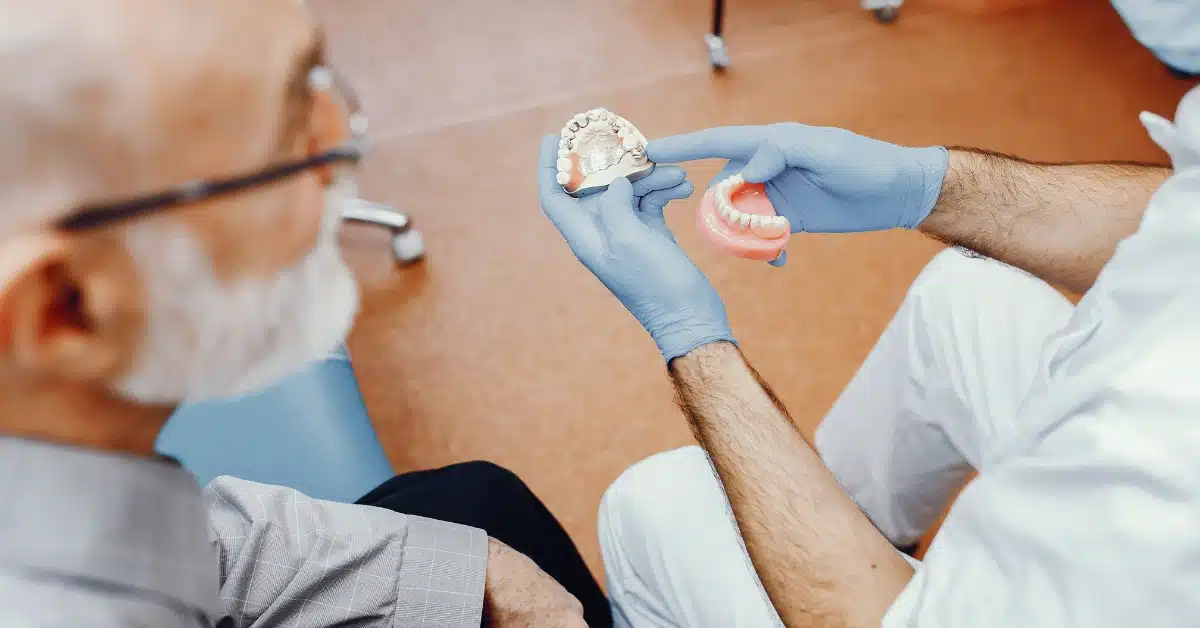
Am I a Candidate for Dental Implants? Who Qualifies for Full Arch Restoration
If you’re asking yourself am I a candidate for dental implants, you’ve probably already spent time worrying about the answer. Maybe you’ve been told your teeth are failing. Maybe you’ve worn dentures for years and want something permanent. Maybe you’re 70 years old and wondering whether you’re too far along in life to qualify. I want to address that fear directly: age alone has never disqualified a patient from full arch implants.
What matters is bone, health, and realistic goals – and most of those factors are more favorable than patients assume. The majority of adults facing significant tooth loss are candidates for full arch implant restoration. The evaluation process identifies who needs additional preparation first and who can move forward right away. This guide walks through exactly what that evaluation looks at – so you can arrive at your consultation knowing what questions to ask.
✅ Quick Answer: Who Qualifies for Full Arch Implants?
Most adults with missing or failing teeth qualify. The core requirements are:
- Sufficient jawbone volume (or willingness to pursue grafting)
- Stable overall health – chronic conditions don’t automatically disqualify
- Healthy or treatable gum tissue
- Commitment to the multi-stage treatment process
There is no upper age limit. A clinical evaluation – not a birthday – determines candidacy.
What Is Full Arch Restoration and Why It Matters for Older Adults
Full arch restoration replaces an entire upper jaw, lower jaw, or both using dental implants as the foundation. Rather than placing one implant per missing tooth, four to six implants are positioned strategically to support a fixed, non-removable arch of teeth.
The result looks like natural teeth and functions like natural teeth. More importantly for patients in their 60s and 70s, it does something no denture can do: it preserves the jawbone. When teeth are missing, the bone beneath them begins to shrink. Dentures sit on top of the gums and do nothing to stop that process. Implants integrate directly with the bone and actively maintain it.
Bone loss compounds over time and becomes more complex to address the longer it progresses. For older adults, this is the most important argument for acting sooner rather than later. Our full overview of what full arch restoration involves covers the procedure itself in detail. This guide focuses on the candidacy question – who qualifies, what the evaluation looks at, and what to do if you’re not quite ready yet.
Am I a Candidate for Dental Implants? The 4 Core Criteria
Full arch implant candidacy comes down to four areas. No single factor decides the case by itself. Together, they help the implant dentistry team in Henderson determine whether treatment is appropriate and what may need to happen first.
1. Bone Volume and Density – The Most Important Factor for Full Arch Implant Candidacy
Implants need bone to anchor into. The central question in any candidacy evaluation is whether enough bone is present – and whether it’s dense enough to support the load the implants will carry.
This is assessed with a 3D cone beam CT scan, giving the treatment team a precise view of bone height, width, and density across the entire jaw. If bone volume is lower than ideal, that doesn’t automatically rule out implants. Bone grafting can rebuild jaw structure before implant placement. Techniques like angled or zygomatic implants are specifically designed to work with reduced bone volume by anchoring into denser areas of the skull. The evaluation determines which approach fits your anatomy – not whether an approach is possible at all.
2. Overall Health
Most chronic health conditions common in the 60-85 age group – including controlled high blood pressure, managed diabetes, and osteoporosis – do not automatically disqualify a patient from implants. What matters is whether those conditions are stable and well-managed.
Uncontrolled diabetes, for example, affects healing and immune response in ways that need to be addressed before implant placement. A patient with well-controlled blood sugar is typically an excellent candidate. The same logic applies to most systemic conditions. Stability is the goal, not perfection.
3. Gum Health
Active gum disease needs to be treated before implants are placed. The bacteria responsible for periodontal disease can interfere with how implants integrate with bone and significantly raise the risk of early failure.
The good news is that gum disease is treatable, and clearing it up is typically a prerequisite step rather than a disqualifying condition. If your gums are currently healthy or have been treated and are stable, this factor works in your favor.
4. Commitment to the Process
Full arch restoration is not a single appointment. From evaluation through final restoration, the process typically spans several months, with healing periods between stages.
Patients who are committed to following through and maintaining good oral hygiene afterward are the ones who achieve the best long-term outcomes. That commitment is itself a meaningful candidacy factor – and one entirely within your control.
✓ Full Arch Implant Candidacy: A Simple Self-Check
If you can say yes to most of these, a consultation is the right next step:
- I am missing most or all of my teeth in one or both jaws
- I have teeth that my dentist has told me are failing or need to come out
- I currently wear dentures and want a fixed, permanent alternative
- My chronic health conditions (if any) are under medical management
- I am a non-smoker, or I am willing to quit before treatment
- I am ready to commit to a multi-month treatment process
Does Age Disqualify You? What Who Qualifies for Full Arch Implants Actually Means
This is the question I hear most often from patients in their 70s and 80s – and the answer is worth stating plainly: there is no upper age limit for dental implants. Age as a number is not a clinical barrier.
According to the American Academy of Implant Dentistry, implant candidacy is determined by bone density, overall health status, and healing capacity – not chronological age. What changes with age is that certain health factors become more relevant to the conversation: bone density, healing time, medication interactions, and general health stability. These are all things the evaluation addresses directly.
A healthy 75-year-old with adequate bone is a better implant candidate than a 45-year-old with uncontrolled diabetes and significant bone loss. The variables that matter are clinical, not calendrical.
For older adults, there is also a quality-of-life argument worth making directly. The years ahead still deserve functional, comfortable teeth. Continuing to manage failing teeth or poorly fitting dentures is a daily burden that full arch restoration is specifically designed to eliminate. Patients who pursue treatment in their 70s consistently report that it changed their lives – and that they wish they had done it sooner.
| Factor | Full Arch Implants | Traditional Dentures |
|---|---|---|
| Preserves Jawbone | ✓ Yes | ✗ No |
| Fixed in Place | ✓ Yes | ✗ Removable |
| Chewing Strength | Up to 95% of natural | ~25% of natural |
| Requires Relining / Replacement | ✓ No | ✗ Every 5–7 years |
| Long-Term Lifespan | 20–30+ years | 5–10 years |
| Feels Like Natural Teeth | ✓ Yes | ✗ No |
Health Conditions That Need Extra Planning – Not Automatic Disqualification
A few health factors require more careful planning or coordination with your medical team. Being aware of them ahead of your consultation helps you come prepared with the right information.
- Bisphosphonate medications: Drugs prescribed for osteoporosis can affect jaw bone metabolism. Patients taking these medications are not automatically disqualified – the treatment team needs to know the medication, the dose, and the duration of use. In many cases, implants remain possible with appropriate precautions.
- Blood thinners: Anticoagulants like warfarin or newer blood-thinning medications require coordination with your prescribing physician around surgical procedures. This is manageable in most cases and is standard practice for dental surgery in patients taking these medications.
- Uncontrolled systemic disease: Any condition that is actively uncontrolled – whether diabetes, autoimmune disease, or cardiovascular disease – needs to be stabilized before proceeding. This is about timing and sequencing, not permanent disqualification.
- Active cancer treatment: Patients currently undergoing radiation to the head and neck region or certain chemotherapy protocols need to discuss timing with their oncology team. Implants may be possible before, during a break in treatment, or after treatment is complete, depending on the specifics.
- Smoking: Smoking significantly reduces implant success rates by restricting blood flow to healing tissue. Patients who are willing to quit – or who have already quit – improve their candidacy substantially.
What Full Arch Implants Cost – And How Patients Make It Work
Cost is one of the most common concerns patients bring to an initial consultation, and it deserves a direct answer. Full arch implant restoration typically costs between $20,000 and $35,000 per arch – depending on the number of implants needed, whether bone grafting is required, the type of final restoration, and the geographic market.
Most dental insurance plans provide limited coverage for implants. However, many practices – including ours – offer financing options that spread the cost over time with manageable monthly payments. Medical financing programs like CareCredit allow patients to begin treatment without paying the full amount upfront.
The comparison that matters isn’t just the sticker price of implants versus dentures. It’s the total cost over time – including relining and replacing dentures every five to seven years as bone changes, managing dental emergencies with failing natural teeth, and the compounding cost of progressive bone loss that makes future treatment more complex and expensive. For many patients, full arch implants represent a permanent solution that ends that ongoing cycle. Our full arch reconstruction page covers current financing options and what each stage of treatment involves.
Frequently Asked Questions About Full Arch Implant Candidacy
Am I a candidate for dental implants if I have significant bone loss?
Bone loss is one of the most common findings in patients considering full arch implants – and it’s rarely a disqualifying factor on its own. Bone grafting can rebuild jaw structure that has been lost over time. Techniques like angled implant placement and zygomatic implants are specifically designed for patients with significant bone loss who want to avoid or minimize grafting. The evaluation will show exactly how much bone is present and which approach makes the most clinical sense for your anatomy.
Is there an age limit – and who qualifies for full arch implants at 70 or older?
There is no maximum age limit for dental implants. For adults, age itself is not a clinical barrier. Health status, bone density, and the stability of any chronic conditions matter far more than chronological age. Adults in their 80s have successfully received full arch implant restorations and gone on to enjoy years of improved function and quality of life. The evaluation looks at your health picture – not your birth year.
How long does the full arch implant process take?
The timeline from evaluation to final restoration typically ranges from three to nine months, depending on whether preparatory procedures like bone grafting are needed. Patients requiring grafting will have a longer healing phase before implants can be placed. For patients with adequate bone, the process can move considerably faster. In many cases, a temporary set of teeth is delivered on the same day as implant surgery, so patients leave the office with a functional smile while the final restoration is being fabricated.
Who qualifies for full arch implants after years of wearing dentures?
Long-term denture wearers are among the most common candidates for full arch restoration – and among those who benefit most from it. Years of wearing dentures typically means years of progressive bone loss, which the evaluation will measure and account for in the treatment plan. Wearing dentures doesn’t disqualify you. It does mean the evaluation will pay close attention to bone volume and may recommend grafting to build the best possible foundation before implants are placed.
What’s the difference between full arch implants and regular dental implants?
A traditional dental implant replaces a single tooth with a single titanium post and crown. Full arch implants use four to six strategically placed implants to support an entire arch of teeth as one connected restoration. This approach is more practical and cost-effective than replacing every tooth individually, and it’s specifically designed for patients who have lost most or all teeth in one or both jaws. Our overview of dental implants explains the full range of implant solutions and how they compare.
The Evaluation Is Where the Real Answer Starts
Reading about candidacy criteria is useful. It helps you understand what the process involves and what questions to bring to a consultation. But the real answer to am I a candidate for dental implants comes from a clinical evaluation – imaging, a health review, and a direct conversation with a treatment team looking at your specific situation.
What I consistently see: the evaluation almost always reveals more options than patients expect. Most people who come in convinced they’re not candidates leave with a clear path forward. The question isn’t usually whether full arch restoration is possible – it’s how to sequence the steps to get there.
Find Out If You Qualify – No Pressure, No Obligation
Our full arch team offers consultations designed specifically for patients facing tooth loss or failing dentition. We’ll review your imaging, walk through your health history, and give you an honest picture of your options.