
Abscessed Tooth Emergency in Henderson, NV: Get Same-Day Relief Now
Table of Contents
If you’re reading this with the symptoms of an abscessed tooth emergency – severe tooth pain, facial swelling, or fever – stop searching and call us immediately at (702) 735-2755. An abscessed tooth is a dental emergency that requires same-day treatment. We see emergency patients in Henderson every day, and we can see you today.
Here’s what you need to know right now: an abscessed tooth is a pocket of pus caused by bacterial infection. It doesn’t get better on its own. It gets worse. The infection can spread from your tooth to your jaw, your neck, and in severe cases, to your brain or bloodstream. This isn’t scare tactics – this is medical reality. People die from untreated dental abscesses. Not often, but it happens, and it’s completely preventable with prompt treatment.
I’ve treated hundreds of abscessed tooth emergencies in Henderson over the past two decades. The patients who come in immediately get relief within hours. The ones who wait days or weeks? They end up in the emergency room with life-threatening complications, massive medical bills, and sometimes permanent damage. There’s no good reason to delay treatment when same-day appointments are available.
You’re probably experiencing some combination of these symptoms: severe, constant throbbing pain that might radiate to your jaw, neck, or ear. Swelling in your face, cheek, or neck. Sensitivity to hot and cold that’s become unbearable. A bad taste in your mouth or foul smell that won’t go away. Difficulty swallowing or breathing. Fever. These are your body’s alarm bells telling you that infection is spreading.
At Comprehensive Dental Care in Henderson, we reserve time slots every day specifically for dental emergencies. You don’t need to suffer through the night or the weekend. You don’t need to go to an emergency room where they’ll give you antibiotics and pain medication but can’t actually treat the abscess. You need a dentist who can drain the infection, eliminate the source, and stop the pain – and we can do that today.
What follows is important information about tooth abscesses, their dangers, and treatment options. But if you’re in severe pain or showing signs of spreading infection – swelling, fever, difficulty swallowing – read this later. Call (702) 735-2755 now. Your health is more important than finishing an article.
Warning Signs You Have a Dental Abscess (Don’t Ignore These)

Tooth abscesses don’t develop silently. Your body sends clear signals that something is seriously wrong. The problem is that many people try to push through these symptoms, hoping they’ll resolve on their own. They won’t. Here are the specific warning signs that indicate you need emergency dental care in Henderson today:
Severe, persistent throbbing pain that keeps you awake at night. This isn’t the sharp, brief sensitivity from a cavity. This is deep, constant pain that pulses with your heartbeat. The pain might radiate to your jawbone, your neck, or your ear on the affected side. Over-the-counter pain medication barely touches it, or stops working after a few hours. This pain indicates that infection has reached or passed your tooth’s nerve chamber and is creating pressure as pus accumulates.
Visible swelling in your face, cheek, jaw, or neck. When you look in the mirror, one side of your face looks noticeably larger than the other. The swollen area feels warm and tender to touch. This swelling means the infection has broken through your tooth and is spreading into surrounding tissues. As the swelling increases, it can press on your airway – which is why some patients with severe abscesses end up intubated in the ICU. I’ve hospitalized patients whose facial swelling progressed so rapidly that their airway was compromised within 24 hours of first noticing symptoms.
Fever, chills, and general malaise that feels like the flu. Your body is mounting a systemic response to the infection. A fever means bacteria have entered your bloodstream, and your immune system is fighting back. This is the stage where a dental infection becomes a medical emergency. If you have a fever along with tooth pain and swelling, you need treatment immediately – as in, today, not tomorrow.
Foul taste or smell in your mouth that doesn’t go away with brushing. Sometimes an abscess ruptures on its own, and you’ll suddenly taste something horrible as pus drains into your mouth. Patients describe it as the worst taste they’ve ever experienced. While the rupture temporarily relieves pressure and reduces pain, it doesn’t solve the problem. The infection source remains, and it will continue producing pus and spreading unless professionally treated.
Difficulty swallowing, breathing, or opening your mouth fully. This is a medical emergency requiring immediate attention. When infection spreads to the floor of your mouth or your throat area (a condition called Ludwig’s angina), it can obstruct your airway. If you’re having any trouble breathing or swallowing, call 911 or go directly to an emergency room, then follow up with our office for definitive dental treatment once you’re medically stable.
Tender, swollen lymph nodes under your jaw or in your neck. Your lymphatic system is trying to filter out the bacteria from the infection. Swollen, painful lymph nodes on the same side as your tooth pain indicate the infection is spreading through your lymphatic system – another sign that this has progressed beyond a simple dental problem into a systemic infection.
I see patients every week who’ve been dealing with these symptoms for days before finally calling. They tell me they thought it would get better. They were hoping to avoid the dentist. They took antibiotics left over from a previous illness. They were too busy to come in. I understand all of these reactions – dental anxiety is real, life is demanding, and nobody wants to deal with emergency dental treatment. But here’s the hard truth: every day you wait, the infection spreads further, treatment becomes more complex, and your risk of serious complications increases.
The time to call Comprehensive Dental Care in Henderson is as soon as you notice these symptoms, not after you’ve tried everything else. We can stop the infection, drain the abscess, and end your pain in a single emergency visit. But the longer you wait, the harder that becomes.
Why a Tooth Abscess Is a Medical Emergency

Your mouth is closer to your brain than any other infection site in your body. It’s also richly supplied with blood vessels that connect directly to vital organs. This anatomical reality is why dental infections can become life-threatening faster than most people realize. Let me explain exactly what happens when an abscessed tooth goes untreated:
The Infection Spreads Beyond Your Tooth
A tooth abscess starts in the pulp chamber – the hollow center of your tooth containing nerves and blood vessels. Bacteria from deep decay or a crack invade this space, multiply rapidly, and kill the nerve tissue. Your immune system tries to wall off the infection, but bacteria continue producing pus. That pus needs somewhere to go. It creates pressure inside your tooth until it finds the path of least resistance – usually through the tip of your root into the surrounding bone.
Once infection reaches your jawbone, it doesn’t stop there. It follows the path of least resistance through tissue planes. In your lower jaw, that means it can spread down into your neck. In your upper jaw, it can spread up toward your sinuses, your eye socket, or your brain. I’ve seen abscesses from upper molars erode through the sinus floor. I’ve seen lower molar infections spread to the point where patients couldn’t open their mouths or swallow.
Sepsis: When Infection Enters Your Bloodstream
Your teeth are surrounded by blood vessels. When an abscess breaks through bone and soft tissue, bacteria can enter your bloodstream. Once that happens, you have sepsis – a life-threatening condition where infection spreads throughout your entire body. Your heart rate increases. Your blood pressure drops. Your organs start failing. People die from sepsis every day, and dental infections are a known cause.
The insidious thing about sepsis is how quickly it progresses. You might feel generally unwell one morning and be in the ICU by evening. This is why fever combined with dental infection requires immediate treatment. The fever means bacteria are already circulating in your blood. Your window for preventing serious complications is measured in hours, not days.
Ludwig’s Angina: The Nightmare Scenario
Ludwig’s angina is a severe infection of the floor of the mouth, typically originating from an abscessed lower molar. The infection spreads rapidly through the spaces under your tongue and jaw, causing massive swelling that pushes your tongue up and back, obstructing your airway. Patients with Ludwig’s angina often require emergency intubation or even a tracheostomy – a surgical hole cut in their throat to maintain breathing.
I’ve sent three patients to the emergency room with Ludwig’s angina over my career. All three survived, but all three required ICU admission, IV antibiotics, surgical drainage, and days of hospitalization. All three told me afterward they’d been dealing with tooth pain for over a week before the rapid swelling started. All three wished they’d come to see me when the pain first began.
Brain Abscess and Meningitis
Infection from upper teeth can spread through sinuses or along blood vessels toward your brain. Brain abscesses and dental meningitis are rare complications of tooth infections, but they happen. When they do, the mortality rate is significant even with aggressive treatment. I mention this not to terrify you, but to make absolutely clear why “waiting to see if it gets better” is never the right approach with an abscessed tooth.
Why Antibiotics Alone Aren’t Enough
Many patients think they can just take antibiotics and avoid dental treatment. This is dangerous thinking. Antibiotics can temporarily suppress the infection and reduce symptoms, but they can’t reach the source of bacteria – the dead tissue inside your tooth or the pus pocket in your jawbone. As soon as you stop taking antibiotics, the infection comes roaring back, often worse than before.
I’ve seen patients take three or four rounds of antibiotics, getting temporary relief each time, only to have the abscess return more aggressive than ever. Meanwhile, they’ve been in pain for months, spent hundreds of dollars on medications, and allowed the infection to cause permanent bone loss around the tooth. The only way to truly resolve an abscessed tooth is to eliminate the source – either through root canal therapy to remove the infected tissue or extraction to remove the tooth entirely.
The Cost of Delay
Every day you delay treatment, several things happen. The infection spreads further into bone and soft tissue. The pain intensifies. The risk of complications increases. The difficulty and cost of treatment go up. A patient who comes in on day one might need a straightforward root canal and antibiotics. A patient who waits two weeks might need extensive surgical drainage, hospitalization, IV antibiotics, and potentially lose the tooth that could have been saved.
I had a patient last year who dealt with tooth pain for three weeks before calling. By the time I saw him, the infection had created a large abscess in his jaw that required surgical drainage, the tooth couldn’t be saved and needed extraction, and he spent four days in the hospital on IV antibiotics. Total cost between the hospital and dental treatment exceeded $15,000. If he’d come in during week one, we could have saved the tooth with a root canal for under $2,000.
This is why we prioritize emergency appointments at Comprehensive Dental Care. When you call with an abscessed tooth, we don’t tell you to wait until next week. We see you the same day, identify the source of infection, drain the abscess if needed, start you on appropriate antibiotics, and create a treatment plan to eliminate the problem permanently. Your health is too important to gamble with delays.
What Causes an Abscessed Tooth
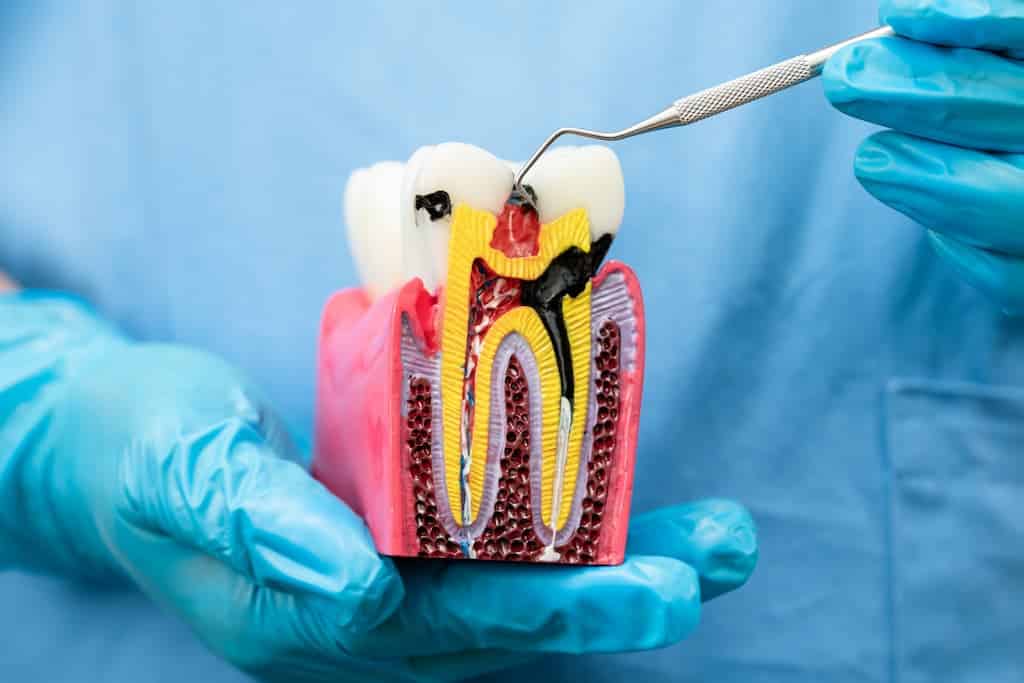
Understanding how tooth abscesses develop helps you prevent future emergencies. While you need immediate treatment for your current abscess, knowing these causes can protect your other teeth:
Deep, untreated tooth decay is the most common cause I see. Cavities start small in your enamel, but bacteria gradually eat through to the softer dentin underneath, then eventually reach the pulp chamber in the center of your tooth. Once bacteria invade the pulp, they kill the nerve tissue and establish infection. The tooth usually hurts intensely when decay first reaches the nerve, then the pain might mysteriously disappear as the nerve dies completely. Many patients mistake this pain relief for healing. It’s not. The infection is just getting started.
If you’ve had a toothache that went away on its own without treatment, you don’t have a miracle – you have a dead tooth with infection brewing inside it. That infection will eventually break through the root tip and form an abscess. The time between nerve death and abscess formation varies from weeks to months, but it’s coming.
Cracked or broken teeth create highways for bacteria to reach your tooth’s interior. Sometimes the crack is obvious – you bit down on something hard and felt a sharp pain. Other times, it’s a hairline fracture from grinding your teeth at night, barely visible even under magnification. Either way, the crack allows bacteria from your mouth to seep into the pulp chamber. Unlike decay, which gradually advances, a crack can cause rapid infection because it provides direct access to the nerve tissue.
I see a lot of abscess emergencies from cracked teeth in Henderson. Patients come in saying they were fine yesterday, and today half their face is swollen. When we examine the tooth, there’s a crack they never knew existed. The infection exploded quickly because bacteria had immediate access to the pulp.
Failed previous root canals can become re-infected years after the original treatment. Root canal therapy removes infected tissue from inside your tooth and seals the space with filling material. But teeth have complex internal anatomy – sometimes tiny side canals get missed, or the seal isn’t perfect, and bacteria find their way back in. I’ve treated patients with 10- or 15-year-old root canals that suddenly became abscessed.
The good news is that many failed root canals can be retreated successfully. We use advanced imaging to identify exactly where the infection is hiding, remove the old filling material, thoroughly clean and disinfect the canals again, and reseal them. Sometimes retreatment isn’t possible due to the tooth’s anatomy or the extent of damage, and extraction becomes necessary. But we always try to save the tooth first.
Advanced gum disease can cause abscesses through a different route. Instead of infection traveling from inside the tooth outward, it travels from outside inward. Deep periodontal pockets allow bacteria to accumulate along the root surface. Over time, this creates pockets of infection in the gum and bone around the tooth – what we call a periodontal abscess rather than a periapical abscess. These cause similar symptoms (pain, swelling, pus) but require different treatment focusing on the gum tissue rather than the tooth’s interior.
Dental trauma from accidents, sports injuries, or falls can damage a tooth’s nerve even if the tooth doesn’t visibly break. The impact can sever blood vessels inside the tooth, causing the nerve to die. Dead nerve tissue becomes infected, and weeks or months after the original injury, an abscess forms. This is why we always recommend follow-up appointments after dental trauma – we’re watching for this delayed complication.
Some risk factors make abscesses more likely. High sugar diets feed the bacteria that cause decay. Poor oral hygiene allows plaque and bacteria to accumulate. Dry mouth from medications reduces your saliva’s natural antibacterial properties. Weakened immune systems from diabetes, chemotherapy, or other conditions make it harder to fight off dental infections. Smoking damages your gum tissue and impairs healing.
But here’s what matters right now: regardless of what caused your abscess, the treatment approach is the same. We need to drain the infection, eliminate the source, and start you on antibiotics if the infection has spread significantly. The prevention conversation comes later, after we’ve handled the emergency.
Immediate Steps to Take Right Now

If you’re experiencing abscessed tooth symptoms, here’s exactly what to do while you’re arranging emergency dental care:
Step 1: Call for an Emergency Appointment
This is not optional. Call Comprehensive Dental Care at (702) 735-2755 immediately. Tell the receptionist you have a dental abscess with specific symptoms – pain, swelling, fever, whatever you’re experiencing. We prioritize these calls and will get you in today. If you’re calling after hours and it’s a true emergency (difficulty breathing, massive swelling, high fever), go to the emergency room first, then call us in the morning to schedule definitive treatment.
Step 2: Manage Pain Safely
Take over-the-counter pain medication according to package directions. Ibuprofen (Advil, Motrin) works well for dental pain because it reduces both pain and inflammation. Acetaminophen (Tylenol) is another option. You can alternate between them for better pain control – for example, ibuprofen every six hours and acetaminophen every four hours, staggered. But don’t exceed the maximum daily doses listed on the packages.
Do not take antibiotics unless prescribed by a dentist or physician who has examined you. Don’t use leftover antibiotics from previous illnesses. Wrong antibiotic, wrong dose, or incomplete course can make things worse by creating antibiotic-resistant bacteria.
Step 3: Rinse with Warm Salt Water
Mix half a teaspoon of salt in eight ounces of warm water. Swish gently around your mouth for 30 seconds, focusing on the affected area, then spit it out. Repeat every few hours. Salt water won’t cure the infection, but it can provide temporary relief and help keep the area clean.
Step 4: Use Cold Compresses (Not Heat)
Apply a cold pack or ice wrapped in a towel to the outside of your cheek near the swollen area for 15 minutes at a time. Cold reduces swelling and numbs pain. Never use heat on an abscess – heat increases blood flow to the area, which can spread infection faster and make swelling worse. This is a common mistake people make, thinking heat will “draw out” the infection. It doesn’t work that way.
What NOT to Do
Don’t try to pop or drain the abscess yourself. I’ve seen patients attempt this with needles, knives, even power tools in desperate moments of pain. This is incredibly dangerous. You can spread infection into your bloodstream, damage important structures, and make the situation exponentially worse. Professional drainage in a sterile environment is completely different from bathroom surgery.
Don’t stop calling if you can’t reach us immediately. If we’re closed and you need care right now, Henderson Hospital and other local emergency rooms can provide initial treatment – pain control, antibiotics, and sometimes drainage if a surgeon is available. They can’t perform root canals or extractions, but they can stabilize you until you can get to our office.
Don’t assume antibiotics alone will fix it. Even if an emergency room or urgent care gives you antibiotics, you still need definitive dental treatment. The antibiotics might make you feel better temporarily, but the infection will return without addressing the source.
Don’t delay because you’re worried about cost. We work with patients on payment options, and we accept most dental insurance. More importantly, the cost of emergency treatment today is a fraction of what you’ll pay if you wait until you need hospitalization. And obviously, your life and health are worth more than the treatment cost.
When to Go Directly to the Emergency Room
Call 911 or go straight to the emergency room if you experience:
- Difficulty breathing or swallowing – This indicates airway compromise and requires immediate medical intervention
- High fever over 103°F – Signs of severe systemic infection
- Rapid swelling that’s noticeably increasing over hours – Potential Ludwig’s angina
- Severe neck swelling or stiffness – Infection spreading toward vital structures
- Confusion, dizziness, or rapid heartbeat – Possible sepsis
- Eye swelling or vision changes from upper tooth abscess – Infection spreading toward eye or brain
These symptoms indicate complications beyond what we can handle in a dental office setting. You need emergency medical care first to stabilize the life-threatening aspects, then dental treatment to eliminate the infection source.
For abscess symptoms without these emergency warning signs – severe pain, regular swelling, bad taste, fever under 103°F – call our Henderson office. We’re equipped to handle these emergencies and get you out of pain the same day you call.
Same-Day Abscessed Tooth Treatment at Comprehensive Dental Care
When you come to our Henderson office with a dental abscess emergency, here’s exactly what happens – and why our same-day treatment approach gets you out of pain fast:
Immediate Assessment and Diagnosis
We start with a focused examination of the affected area. I’m looking at the swelling pattern, testing which tooth or teeth are involved, checking for drainage, and evaluating how far the infection has spread. We take digital X-rays immediately – these show us the extent of bone loss around the tooth, whether there’s an abscess visible at the root tip, and help us identify the source of infection.
In complex cases, we have 3D CBCT scanning available in our Henderson office. This technology creates a complete three-dimensional map of your teeth, bone, and surrounding structures. It’s particularly useful for abscesses that involve multiple teeth, failed root canals, or infections near critical structures like your sinuses. Having this diagnostic capability in-house means we don’t need to send you elsewhere for imaging – everything happens in one location on the same day.
Pain Relief and Drainage
Your immediate concern is pain. Ours too. We get you comfortable first. Local anesthesia blocks the pain signals from the affected area. For patients with significant dental anxiety or complex cases requiring extensive work, we offer sedation options including nitrous oxide (laughing gas) and oral conscious sedation.
If the abscess is accessible and pointing (ready to drain), we can often provide immediate relief by creating a drainage pathway. This releases the built-up pressure and pus, which dramatically reduces pain within minutes. For periapical abscesses (at the root tip), we might drain through the tooth itself. For periodontal abscesses (in the gum), we can drain through the gum tissue. Either way, getting that pressure and infection out provides instant relief.
Antibiotic Therapy
We prescribe antibiotics when the infection has spread beyond the immediate area – indicated by fever, significant swelling, lymph node involvement, or systemic symptoms. The specific antibiotic depends on your medical history, allergies, and the type of infection. Most commonly, we use amoxicillin or clindamycin for dental abscesses.
Here’s what’s important to understand: antibiotics are supplementary treatment, not primary treatment. They help your immune system control the spread of infection while we eliminate the source. Starting antibiotics the same day you’re seen means you’re getting ahead of the infection immediately, not waiting days for an appointment while bacteria continue multiplying.
Definitive Treatment Options
Once you’re comfortable and we’ve drained any accessible infection, we discuss your treatment options. The goal is saving your tooth if possible, but sometimes extraction is the better choice. If extraction is the answer, it needs to be done professionally; our guide explains why trying to pull an abscessed tooth yourself is dangerous. Here’s how we decide:
Root Canal Therapy removes the infected tissue from inside your tooth, thoroughly cleans and disinfects the internal canals, and seals them to prevent reinfection. We can often start or even complete root canal treatment the same day as your emergency visit. For straightforward cases – single-rooted teeth, accessible infection – we can finish the entire procedure in one appointment. More complex cases might need a second visit to complete, but we’ll get you out of pain and start the treatment process immediately.
After root canal therapy, the tooth typically needs a crown for long-term protection, but that comes later after the infection is completely resolved. Our immediate focus is eliminating your pain and stopping the infection.
Tooth Extraction is recommended when the tooth is too damaged to save, when the infection has destroyed too much supporting bone, or when root canal therapy isn’t a viable option due to the tooth’s anatomy or your preferences. Extraction immediately eliminates the infection source. While losing a tooth isn’t ideal, it’s better than keeping a chronically infected tooth that threatens your overall health.
We can extract most abscessed teeth the same day, even with active infection. Some dentists prefer to prescribe antibiotics first and extract later, but I’ve found that removing the source of infection provides faster relief and better outcomes. We take appropriate precautions, provide adequate anesthesia, and have you comfortable throughout the procedure.
After extraction, we discuss replacement options – dental implants, bridges, or partial dentures depending on the location and your goals. But that conversation happens after you’ve healed. Emergency day is about resolving the crisis.
Advanced Technology Makes a Difference
Our investment in diagnostic and treatment technology means better outcomes for abscess cases. Digital X-rays provide instant, detailed images with 90% less radiation than traditional film. Our intraoral cameras let you see exactly what I’m seeing – sometimes the best way to understand why a tooth needs extraction is to see the extent of damage yourself. 3D CBCT scanning reveals infections in places traditional X-rays might miss.
For treatment, we use rotary endodontic instruments for root canals that are faster and more thorough than traditional files. We have surgical extraction capabilities for complex cases. Everything you need for comprehensive abscess treatment is available in our Henderson office – no referrals to specialists unless you specifically want one, no waiting days or weeks for appointments elsewhere.
Why Same-Day Treatment Matters
Every hour you spend with an active abscess is another hour of pain, another hour the infection can spread, another hour of risk. When we say same-day treatment, we mean you call in the morning with an emergency and leave that afternoon with the problem addressed. Not managed. Not temporarily controlled. Addressed – infection drained, source eliminated or treatment started, pain medication prescribed, antibiotics if needed, follow-up plan in place.
Our Henderson location specifically maintains emergency availability because we understand that dental emergencies don’t follow business-hour schedules. We see emergency patients the day they call, even if it means staying late or adjusting our schedule. Your health and comfort are too important to make you wait.
What to Expect During Your Emergency Visit
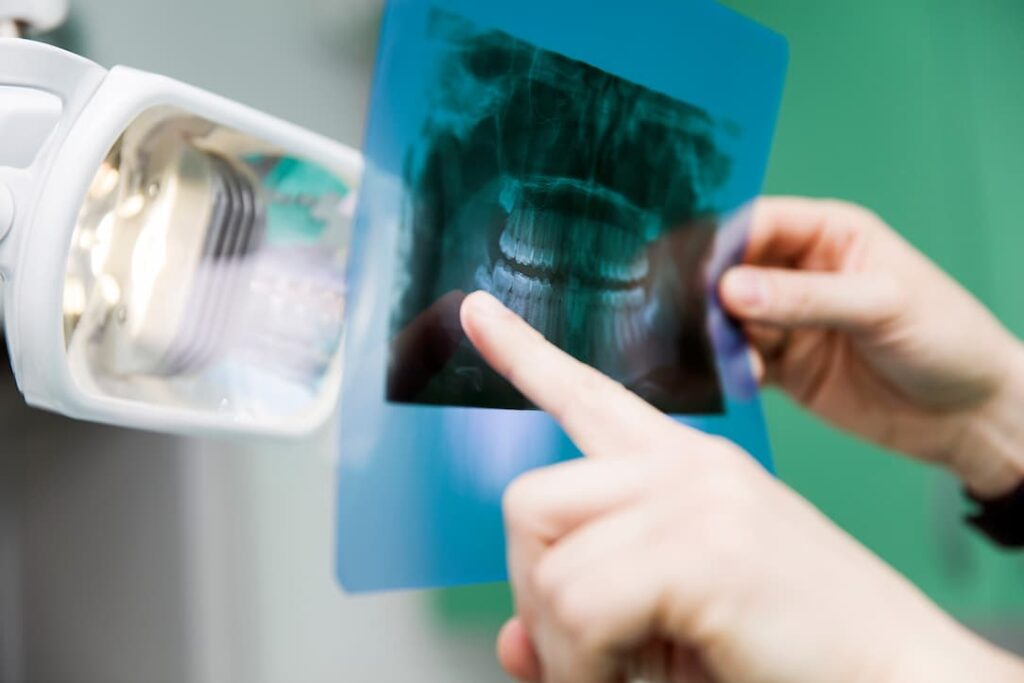
Walking into a dental office with severe pain and swelling can be stressful. Knowing what to expect helps reduce anxiety. Here’s the typical timeline and process for an abscessed tooth emergency visit at our Henderson office:
When You Arrive
Our front desk staff already knows you’re coming and why – you told them about your abscess when you called. You’ll complete brief paperwork (or update existing records if you’re a current patient), including your medical history, current medications, and any allergies. This information is critical for safe treatment – certain medical conditions or medications affect which antibiotics or anesthetics we can use.
We prioritize getting you back to the treatment room quickly. You’re in pain. We know that. We’re not going to leave you sitting in the waiting room while we handle routine cleanings. Emergency patients get immediate attention.
Examination and Imaging
I’ll examine the affected area and take necessary X-rays. The examination might involve gentle percussion testing (tapping on teeth to see which one hurts), thermal testing (brief cold stimulus), and checking your bite. These tests help pinpoint exactly which tooth is abscessed, even when pain seems to radiate everywhere.
Digital X-rays are quick – we position a small sensor in your mouth, take the image, and it appears on a chairside monitor within seconds. I’ll show you the X-ray and explain what I’m seeing – the abscess at the root tip, the amount of bone loss, the extent of decay, whatever is relevant to your case. I’ve found that patients feel more comfortable with treatment when they understand why it’s necessary.
Pain Control
Before any treatment, we ensure you’re completely numb. Local anesthesia for dental procedures is extremely effective – we’re blocking specific nerves that supply sensation to your teeth and gums. The injection itself involves a brief pinch and sting, then numbness develops over a few minutes. We wait until you’re fully anesthetized before proceeding.
For abscessed teeth, sometimes the local anesthesia is less effective because infection changes the pH of tissue and affects how anesthetic works. If you’re not completely numb, we’ll supplement with additional anesthetic or use different techniques to ensure you’re comfortable. Nobody should feel pain during dental treatment in 2024 – we have too many good options for pain control.
Treatment Process
The specific treatment depends on our findings and our discussion about options. If we’re doing root canal therapy, the process involves:
- Accessing the pulp chamber through the biting surface of your tooth
- Removing infected tissue from inside the tooth
- Measuring the length of root canals with electronic apex locators
- Cleaning and shaping the canals with rotary instruments
- Disinfecting thoroughly with antimicrobial solutions
- Filling the canals with sealing material (sometimes done same-day, sometimes at a follow-up)
- Placing a temporary or permanent filling
If we’re extracting the tooth, the process involves:
- Loosening the tooth from its socket with specialized instruments
- Removing the tooth (simple extraction or surgical if complex)
- Cleaning the infected tissue from the socket
- Placing stitches if needed for proper healing
- Providing gauze to control bleeding
- Discussing post-operative care and replacement options
Throughout treatment, I’m checking with you to ensure you’re comfortable. If you need a break, we take a break. If you need more anesthetic, we provide it. Emergency dental treatment doesn’t have to be a traumatic experience when it’s done with appropriate pain control and attention to patient comfort.
Post-Treatment Instructions
Before you leave, we provide detailed written instructions for post-treatment care. These typically include:
Pain management: What medications to take, how often, and what to avoid. Usually over-the-counter ibuprofen and acetaminophen are sufficient after abscess drainage, but we can prescribe stronger pain medication if needed.
Antibiotic instructions: If prescribed, you need to take the entire course even after symptoms improve. Stopping early allows resistant bacteria to survive and causes reinfection.
Activity restrictions: Usually rest for the remainder of the day, avoid strenuous activity for 24-48 hours, no smoking (severely impairs healing), and specific dietary restrictions depending on the procedure.
When to call us: Warning signs that require immediate follow-up – increasing pain or swelling after 48 hours, fever developing after treatment, excessive bleeding, allergic reaction symptoms, or anything that concerns you.
Follow-Up Care
Most abscess cases require at least one follow-up visit. For root canal therapy, we need to check healing and potentially complete the treatment if we only did the first stage. For extractions, we check the healing socket and remove stitches if placed. For periodontal abscesses, we might need additional cleaning or gum therapy once the acute infection is controlled.
We schedule your follow-up appointment before you leave so there’s no confusion about next steps. You have my cell phone number in case any problems develop after hours – I’d rather get a call at 10 PM about concerning symptoms than have you suffer all night wondering if things are normal.
Insurance and Payment
We accept most dental insurance plans and will file claims for you. For emergency treatment, we collect estimated patient portions at time of service. If you don’t have insurance, we offer payment plans through third-party financing companies that can break the cost into manageable monthly payments. Don’t avoid necessary treatment because of cost concerns – we’ll work with you to find an affordable solution.
The investment in prompt abscess treatment is always less than the cost of delayed treatment. Emergency room visits for dental infections can cost thousands of dollars and don’t actually fix the problem. Same-day treatment at our dental office resolves the emergency at a fraction of that cost.
After Treatment: Recovery and Prevention
Once we’ve addressed your abscessed tooth emergency, your focus shifts to proper healing and preventing future occurrences. Here’s what you need to know:
Recovery Timeline
Most patients feel significantly better within 24-48 hours after abscess treatment. The throbbing, severe pain should be gone almost immediately once we’ve drained the infection and eliminated the source. You might have some soreness at the treatment site – this is normal healing discomfort, completely different from abscess pain.
Swelling typically peaks around 48 hours after treatment, then gradually subsides over the following week. This can be alarming if you don’t expect it – you might look more swollen two days after treatment than you did before. This is a normal inflammatory response as your body cleans up the infection site. Continue using cold compresses and following post-treatment instructions.
If you had a root canal, the tooth might feel slightly different for a few weeks as internal inflammation settles down. Avoid chewing hard foods on that tooth until it’s fully restored with a crown. If you had an extraction, the socket takes several weeks to fill in with bone, and complete healing takes 3-4 months before the area is ready for an implant if you choose that replacement option.
Warning Signs During Recovery
Call our Henderson office immediately if you experience:
- Worsening pain after the first 48 hours – Pain should be improving, not intensifying
- Increasing swelling especially if it’s spreading to new areas – Suggests infection isn’t controlled
- Fever developing after treatment – Sign of systemic infection
- Pus drainage continuing more than a day or two after treatment – Indicates persistent infection
- Difficulty swallowing or breathing – Requires immediate emergency care
- Severe reactions to prescribed medications – Rash, difficulty breathing, severe nausea
Most complications are preventable with proper post-treatment care, but when they do occur, early intervention prevents serious problems. Don’t hesitate to call if something doesn’t seem right.
Preventing Future Abscesses
Once you’ve experienced an abscessed tooth, you never want to go through it again. Here’s how to protect yourself:
Address dental problems early. That slight sensitivity you’ve been ignoring? That small cavity you’ve been meaning to get filled? These turn into abscesses when left untreated. Come in for regular checkups every six months so we can catch problems while they’re still minor. A small filling costs a couple hundred dollars and takes 30 minutes. A root canal or extraction after that cavity becomes an abscess costs thousands and takes hours.
Practice consistent oral hygiene. Brush twice daily with fluoride toothpaste. Floss once daily – and actually floss, not just run the floss between your teeth but curve it around each tooth and slide it under the gum line. Use an antiseptic mouthwash if you’re prone to cavities or gum disease. These habits prevent the decay and gum disease that cause most abscesses.
Don’t skip regular cleanings. Professional cleaning removes hardened tartar that you can’t remove with brushing alone. It also allows us to check for early signs of problems – small cavities, gum recession, cracked fillings, anything that might become an abscess if left alone.
Protect your teeth from trauma. Wear a mouthguard for contact sports. Don’t chew ice, hard candy, or use your teeth as tools. Get a custom night guard if you grind your teeth. Preventing cracks prevents one of the most common abscess causes.
Manage risk factors. If you have diabetes, keeping blood sugar controlled reduces infection risk. If you smoke, quitting dramatically improves your oral health and healing capacity. If medications cause dry mouth, use saliva substitutes and sugar-free gum to keep your mouth moist – saliva is your first defense against cavity-causing bacteria.
Complete recommended treatment. If we recommend a crown after root canal therapy, get the crown. Teeth that have had root canals are brittle and prone to fracture without proper restoration. If we identify other teeth with deep cavities during your emergency visit, schedule treatment for those before they become the next emergency.
Long-Term Tooth Health
A tooth that’s been treated for an abscess can last for decades with proper care. Root canal-treated teeth with good crowns function normally and rarely cause problems. Extracted teeth can be successfully replaced with implants, bridges, or dentures that restore both function and appearance.
The key is viewing your emergency treatment as the beginning of renewed attention to your oral health, not just a one-time fix. Regular care prevents emergency situations. I’ve treated thousands of dental emergencies over my career, and I can tell you with certainty: patients who commit to preventive care after their emergency rarely end up back in my chair with another abscess.
Your mouth is the gateway to your body. Oral infections don’t stay in your mouth – they affect your overall health. Taking care of your teeth means taking care of yourself. After experiencing an abscess emergency, you understand firsthand why prevention matters. Use that knowledge to protect yourself going forward.
Don’t Wait – Get Emergency Care Now
An abscessed tooth is a dental emergency that won’t resolve without professional treatment. Every hour you delay increases your pain, your infection risk, and your potential for serious complications. What starts as a toothache can become sepsis, Ludwig’s angina, or a brain abscess if left untreated long enough.
You’ve read about the dangers. You understand the symptoms. You know what treatment involves. Now it’s time to take action if you’re experiencing any signs of an abscessed tooth – severe pain, facial swelling, fever, bad taste, swollen lymph nodes, or any combination of these symptoms.
At Comprehensive Dental Care in Henderson, we see emergency patients the same day you call. We won’t make you wait until next week while infection spreads and pain intensifies. We have the diagnostic technology to identify the exact source of your infection, the treatment capabilities to drain abscesses and perform root canals or extractions, and the experience to handle even complex cases confidently.
Call (702) 735-2755 right now. Tell our staff you have an abscessed tooth emergency. We’ll get you scheduled immediately – often within hours of your call. We serve patients throughout Henderson and the Las Vegas Valley, and our office is equipped to handle your emergency comprehensively without referrals to multiple specialists.
If you’re reading this after hours and have severe symptoms – difficulty breathing, high fever, massive swelling – go to the emergency room at Henderson Hospital or another local facility. They’ll stabilize you medically, then call us first thing in the morning for definitive dental treatment. We can coordinate with hospital staff if needed and ensure you get complete care.
Your health is too important to gamble with delays. Abscessed teeth get worse, not better. The infection spreads further each day. The pain intensifies. The treatment becomes more complex and expensive. And worst of all, you risk serious complications that can affect your entire body.
Same-day treatment means same-day relief. You can walk into our office this morning in severe pain and walk out this afternoon with the infection drained, the source addressed, and a clear path to complete healing. Why suffer any longer than necessary?
Call Comprehensive Dental Care at (702) 735-2755 now. We’re here to help, and we’re ready to see you today.
Frequently Asked Questions: Abscessed Tooth Emergency
What is an abscessed tooth and why is it a dental emergency?

An abscessed tooth is a pocket of pus caused by bacterial infection inside or around the tooth. It becomes an emergency because the infection can spread quickly to the jaw, neck, bloodstream, or even the brain, leading to serious medical complications if not treated immediately.
What symptoms indicate I may have an abscessed tooth?
Common symptoms include severe throbbing pain, facial swelling, fever, foul taste or odor in the mouth, swollen lymph nodes, sensitivity to hot or cold, and difficulty swallowing or opening your mouth. These symptoms mean the infection is progressing and requires same-day treatment.
Can an abscessed tooth go away on its own or with antibiotics alone?
No. Antibiotics may temporarily reduce symptoms, but they cannot remove the source of infection inside the tooth. Without treatment such as drainage, root canal therapy, or extraction, the infection will return and may worsen.
When should I go to the emergency room for an abscessed tooth?
You should go to the ER if you have difficulty breathing or swallowing, rapidly worsening swelling, a high fever over 103°F, confusion, dizziness, severe neck stiffness, or eye swelling. These symptoms signal life-threatening complications like sepsis or airway blockage.
How is an abscessed tooth treated during a same-day emergency visit?
Emergency treatment typically includes a focused exam, digital imaging, pain relief, and drainage of the infection. Depending on severity, the dentist may begin a root canal, perform an extraction, or prescribe antibiotics to control spreading infection.
How can I prevent another abscessed tooth in the future?
Prevention includes treating dental problems early, maintaining good oral hygiene, attending routine cleanings, managing risk factors like dry mouth or diabetes, and avoiding dental trauma. Addressing issues promptly reduces the likelihood of future emergencies.